
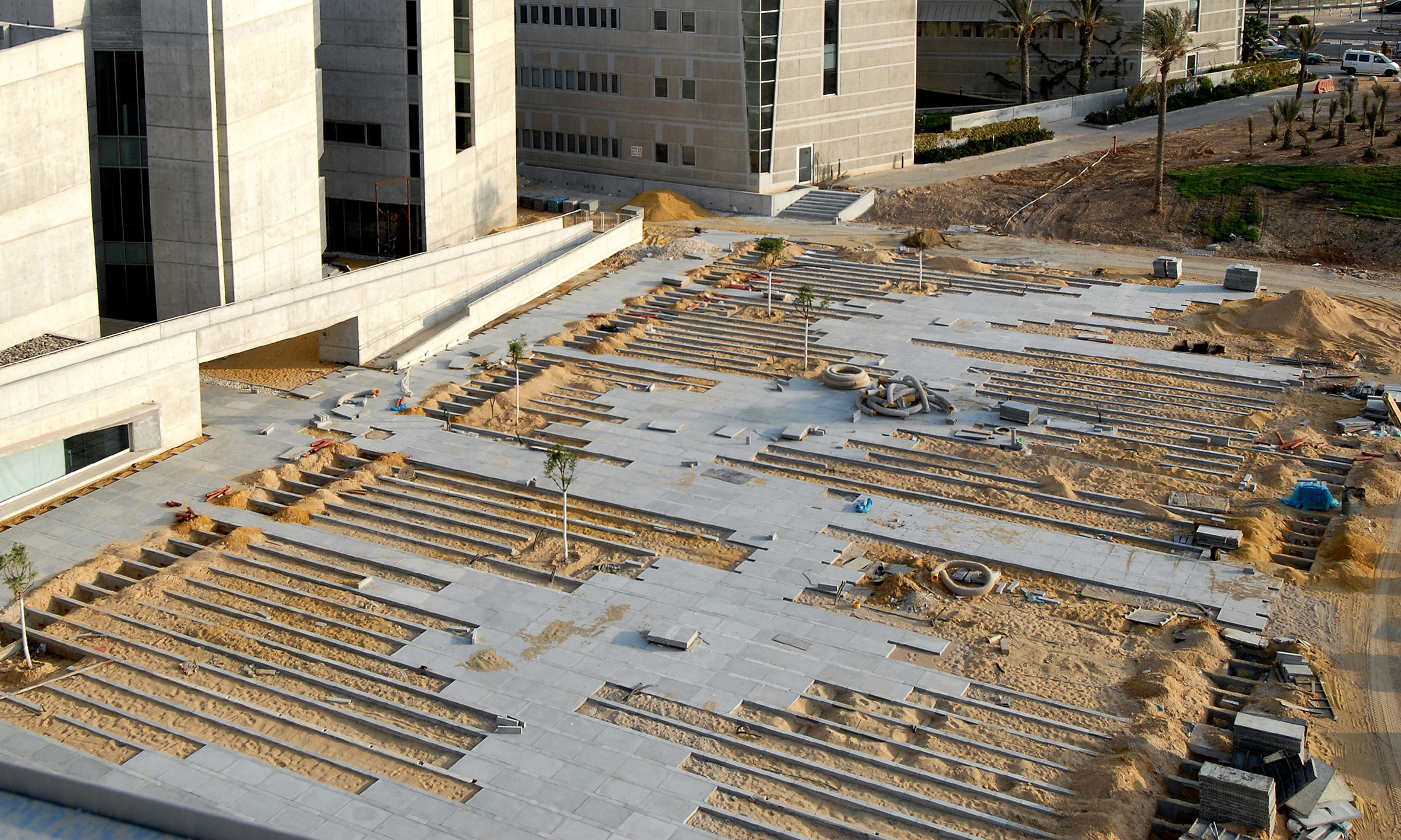
Deichmann Square at Ben-Gurion University of the Negev, Israel
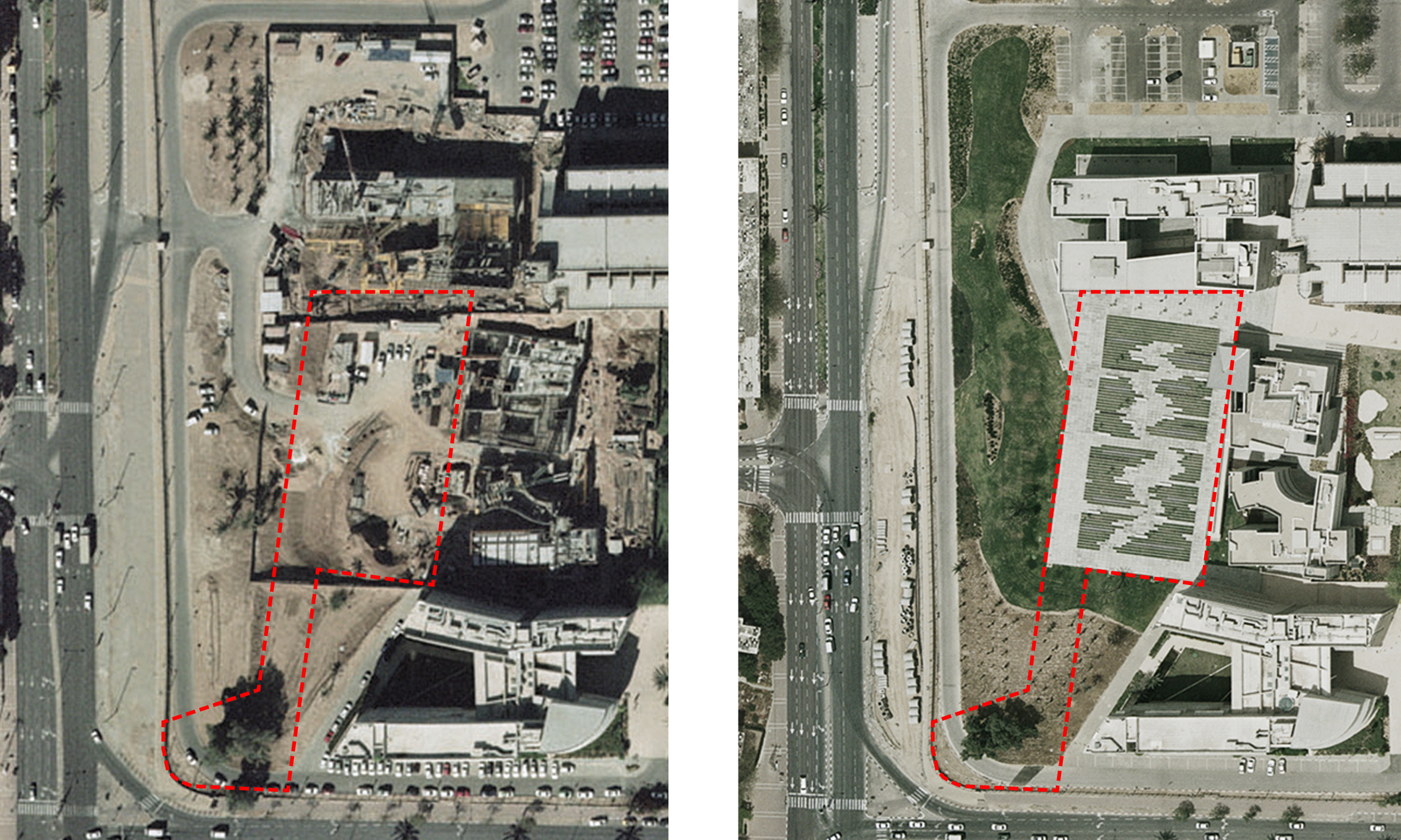
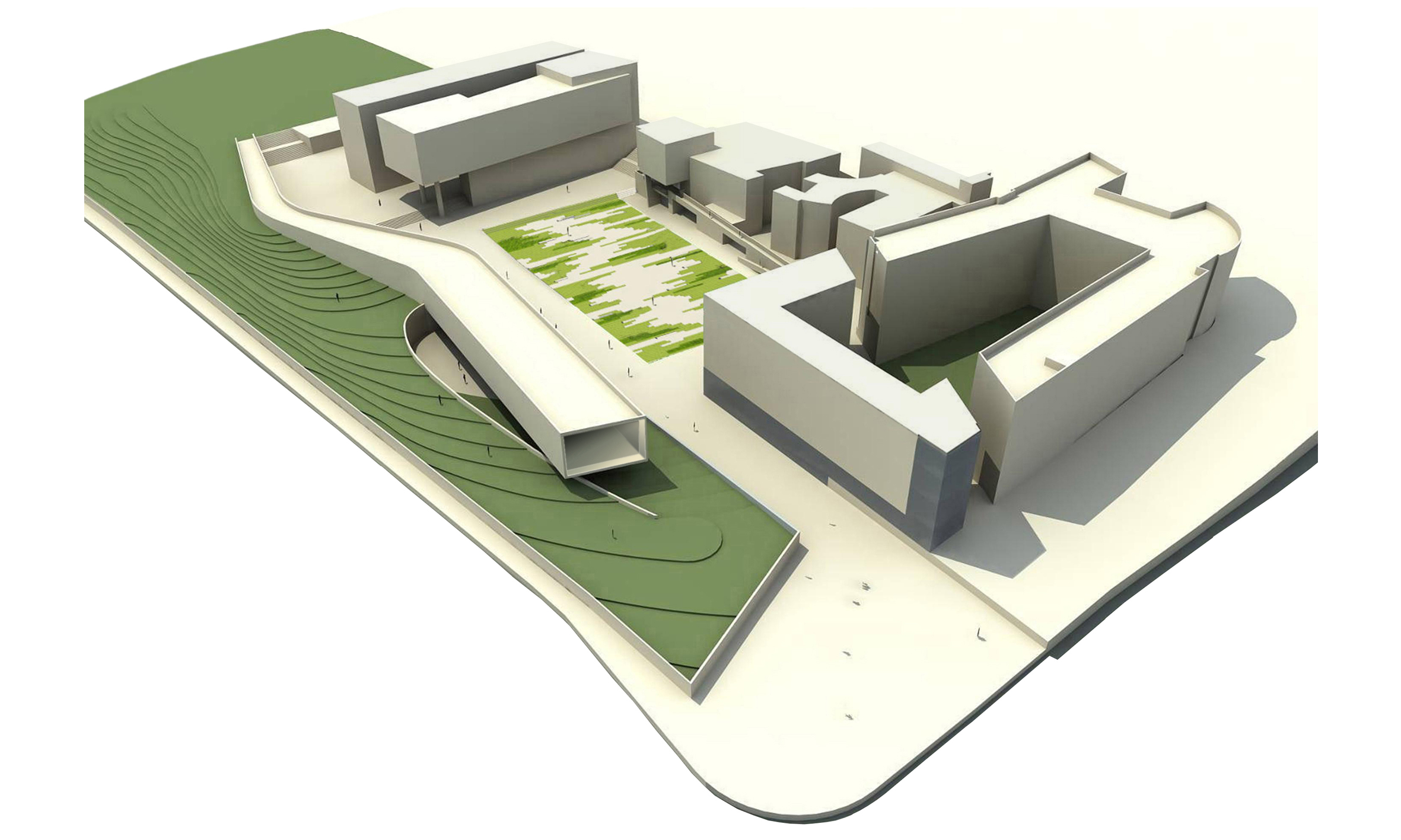
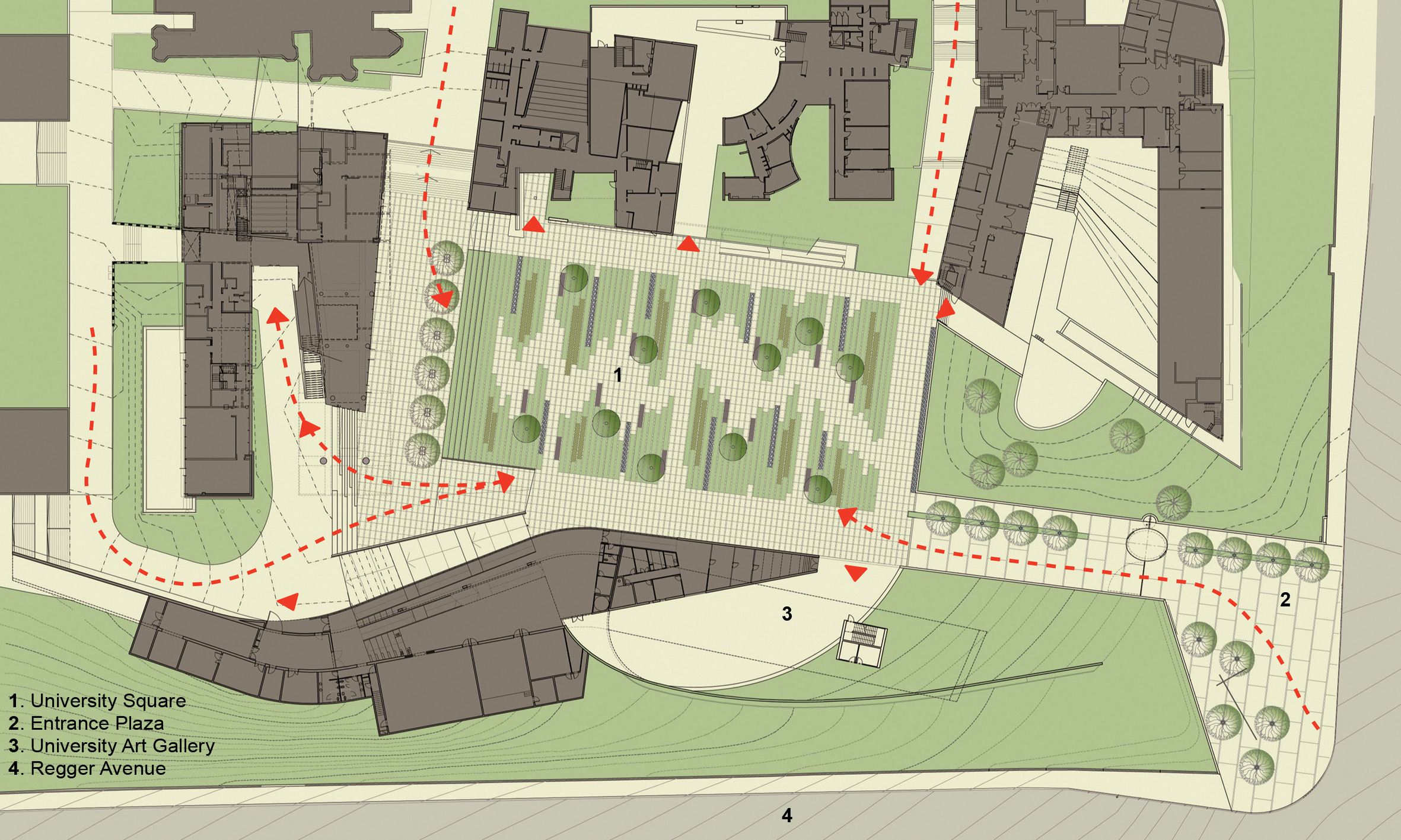
Ben-Gurion University of the Negev is a developing university campus in Beer-Sheva, a city in Israel’s south. Since the university plays an important role in the city both as an employer and as a center of culture, pedestrian access to it is very important. Deichmann Square and the University Gallery next to it have been planned as a single complex, as part of the project of building the university’s façade facing Beer-Sheva’s main avenue. The square is encompassed on three sides by existing three to four-story academic buildings and the planned two-story Gallery. The oblong area between the buildings encompassing the square measures 47x86 meters, and the square inside this area measures 34x70 meters. The buildings around the square contain activities that are intended to serve the city’s community and to acquaint it with the university’s life, and the square has been planned as part of a new entrance to the campus in order to strengthen the connection between the campus and the city.
Deichmann Square is designed to create a common area that connects the entrances of all the buildings encompassing it, so that it may serve as an outdoor meeting place for all its users, especially during off-times from studies. Because intensive use is expected to be made of the square, with hourly changes in the make-up of its occupants during intervals between lectures, a solution that uses a limited amount of vegetation has been preferred. This solution is suitable for the desert climate of the Negev, which does not favor vegetation in the hot and dry summer seasons.
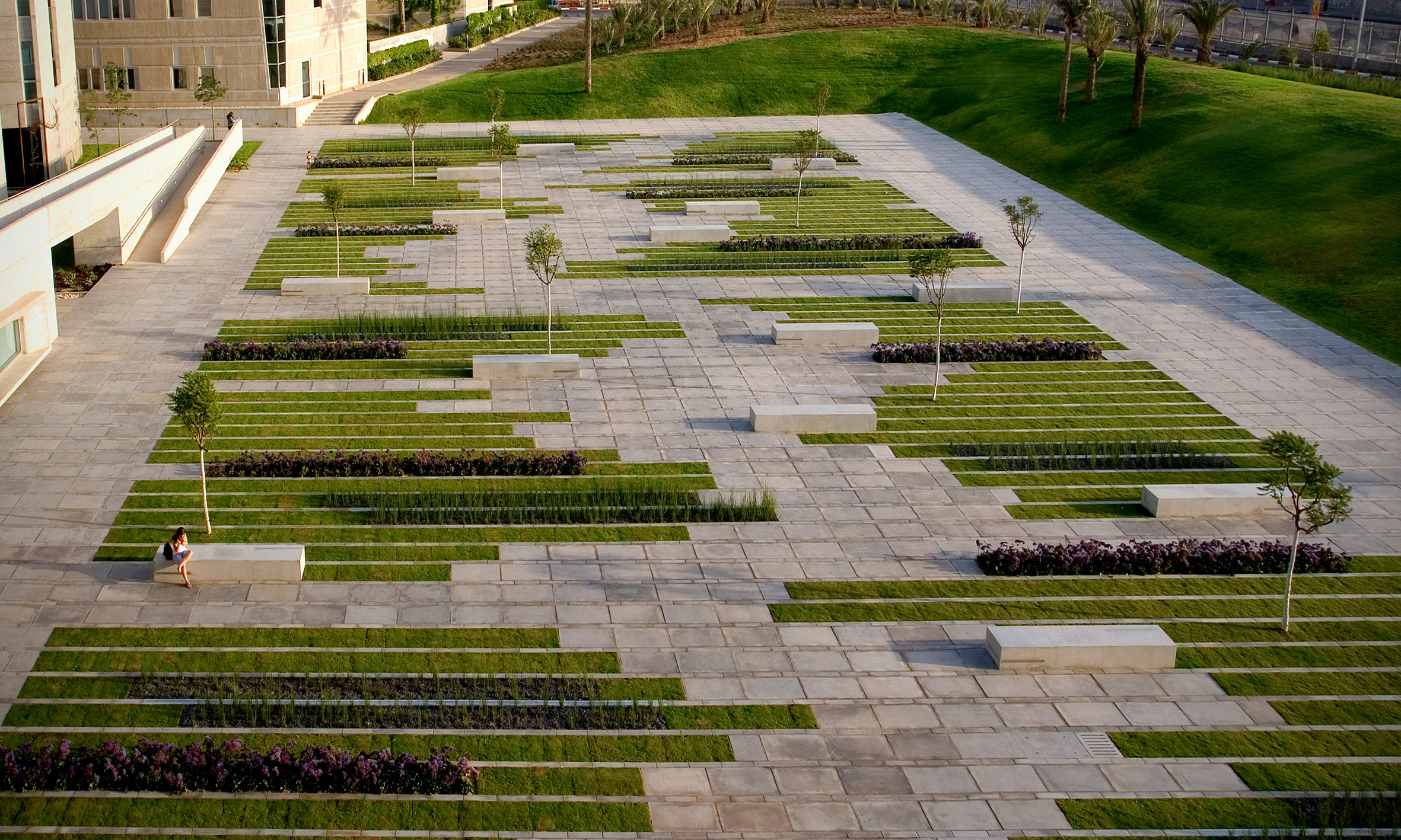
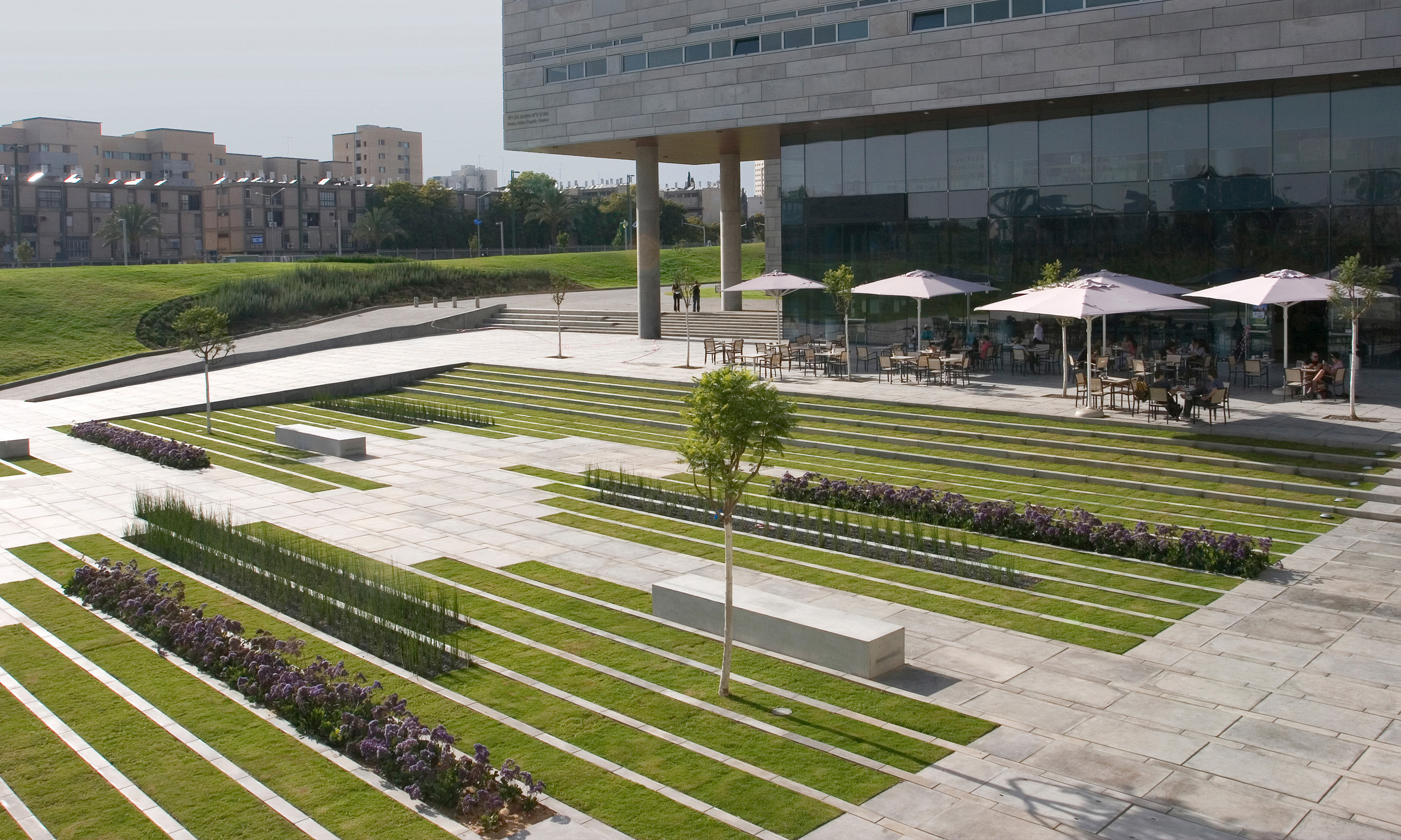
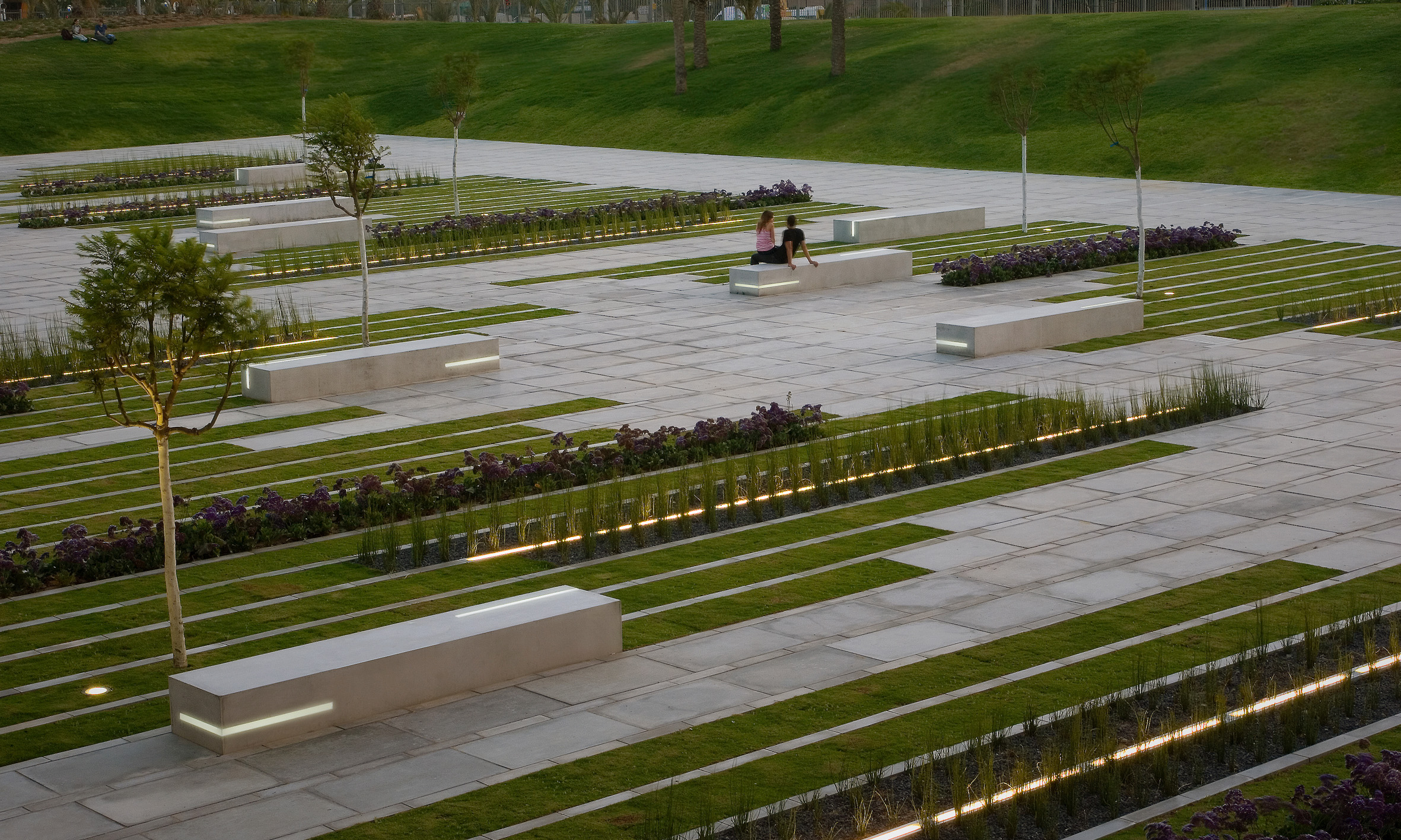
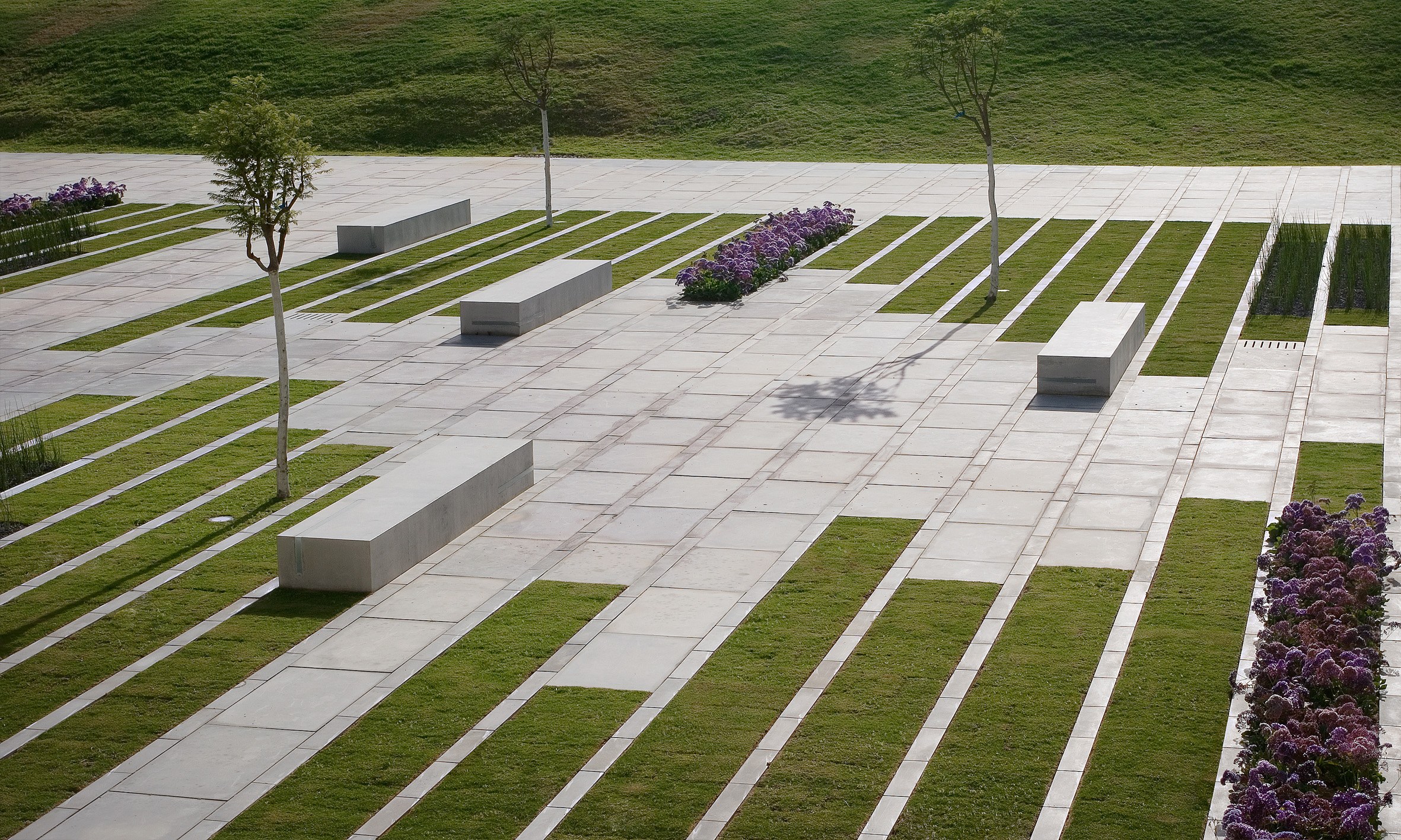
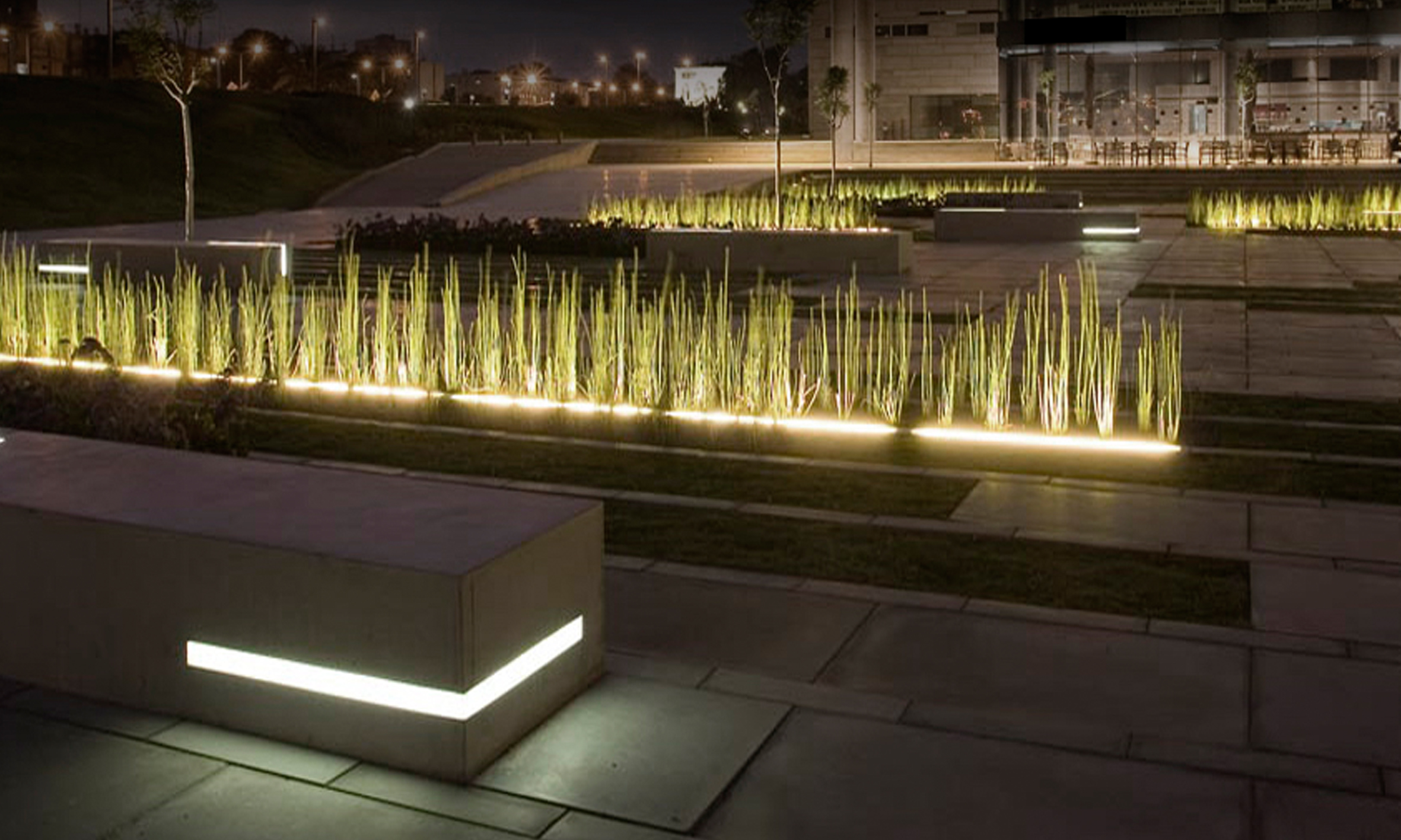
The finishing material of the façades of the existing buildings around the square and of the future Gallery is bare concrete. The choice to pave the square with panels also made of bare concrete is designed to unify the square and the buildings around it into a single visual entity. The oblong square has been planned as a carpet of lateral strips. Each strip is 90 cm wide, and contains a strip of 75x125 cm concrete panels and a 15 cm strip that contains alternating fills of paving tiles, lawn, bushes, flowers, and lighting strips. Sitting areas, each consisting of a 75 cm-wide bench shaded by trees, are scattered randomly through the square. The tree chosen for the square is the jacaranda, which has a lilac flower and is suitable to the Negev climate. Equisetophyta have been used to bound the sitting areas. Some of the fill strips have been planted with beds of geophytes and of seasonal flowers that will be changed every three to four months, so that the floral coloring will change with the seasons. The lighting of the square at night comes from the lighting of the buildings around its perimeter, from lighting strips sunken in the tiles, and from lighting strips inlaid in the benches.
The square’s structural framework is a system of prefabricated beams that define the strips of vegetation and serve as foundations for the laying of both the broad and the narrow paving tiles. The concrete tiles and the benches were developed in collaboration with their producer, Ackerstein, and have become off-the-shelf products for other projects.
| Tipologia | Plaça |
| Promotor | Ben-Gurion University |
| Promoció | P?ca |
| Localització | Negev, Be'er Sheva, Israel |
| Àrea | 4500 m² |
| Cost | 252,20 €/m² |
| Any inici | 2008 |
| Any finalització | 2009 |