Urbanisation of Neerland and Van Eden Park
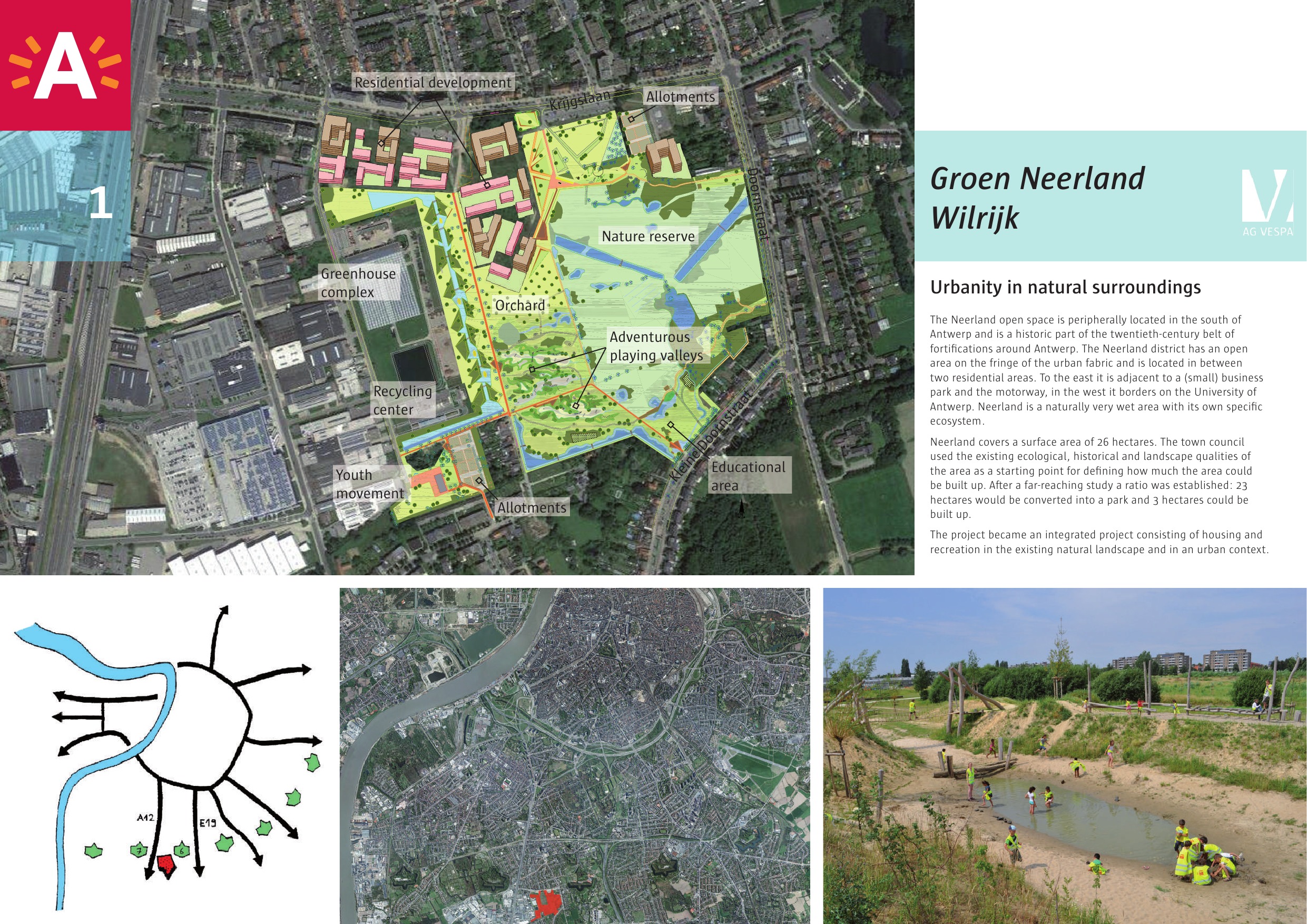
The Neerland open space is peripherally located in the south of Antwerp and is a historic part of the twentieth-century belt of fortifications around Antwerp. The Neerland district has an open area on the fringe of the urban fabric and is located in between two residential areas. To the east it is adjacent to a (small) business park and the motorway, in the west it borders on the University of Antwerp. Neerland is a naturally very wet area with its own specific ecosystem. In the past the site was mainly used for clay extraction to produce bricks. It was also a strategic military location, as evidenced by the anti-tank ditches and military fortifications.
In 2006 the city was searching for an area which could be urbanised as well as looking for ways of creating more recreational space for the city. The Neerland area was deemed a good candidate. Initially the city studied the area’s capacity before commencing the urbanisation process. In planning terms the area was 100% reliable. The town council however decided to use the existing ecological, historical and landscape qualities of the area as a starting point for defining how much the area could be built up. Neerland covers a surface area of 26 hectares. After a far-reaching study a ratio was established: 23 hectares would be converted into a park and 3 hectares could be built up. This was the effective capacity of this area and the surrounding area. The project became an integrated project consisting of housing and recreation in the existing natural landscape and in an urban context.
Sustainability as an objective of the design process
Sustainability was the starting point for every choice made throughout this process, from the recycled materials and the techniques used to the energy-efficient construction and the integrated water management.
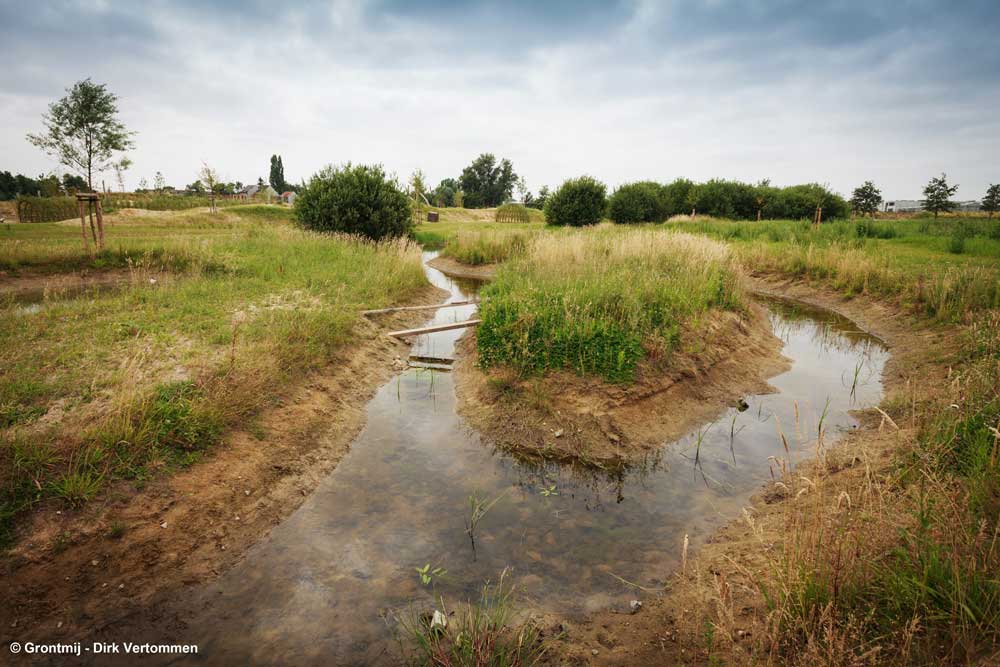
The water management consists of natural buffering, the delayed discharge and purification of the water onsite. The pure spring water is crucial for the existing ecosystem. Existing plants and small landscape elements were preserved and indigenous herbal mixtures and native plantings enhance biodiversity.
Participation
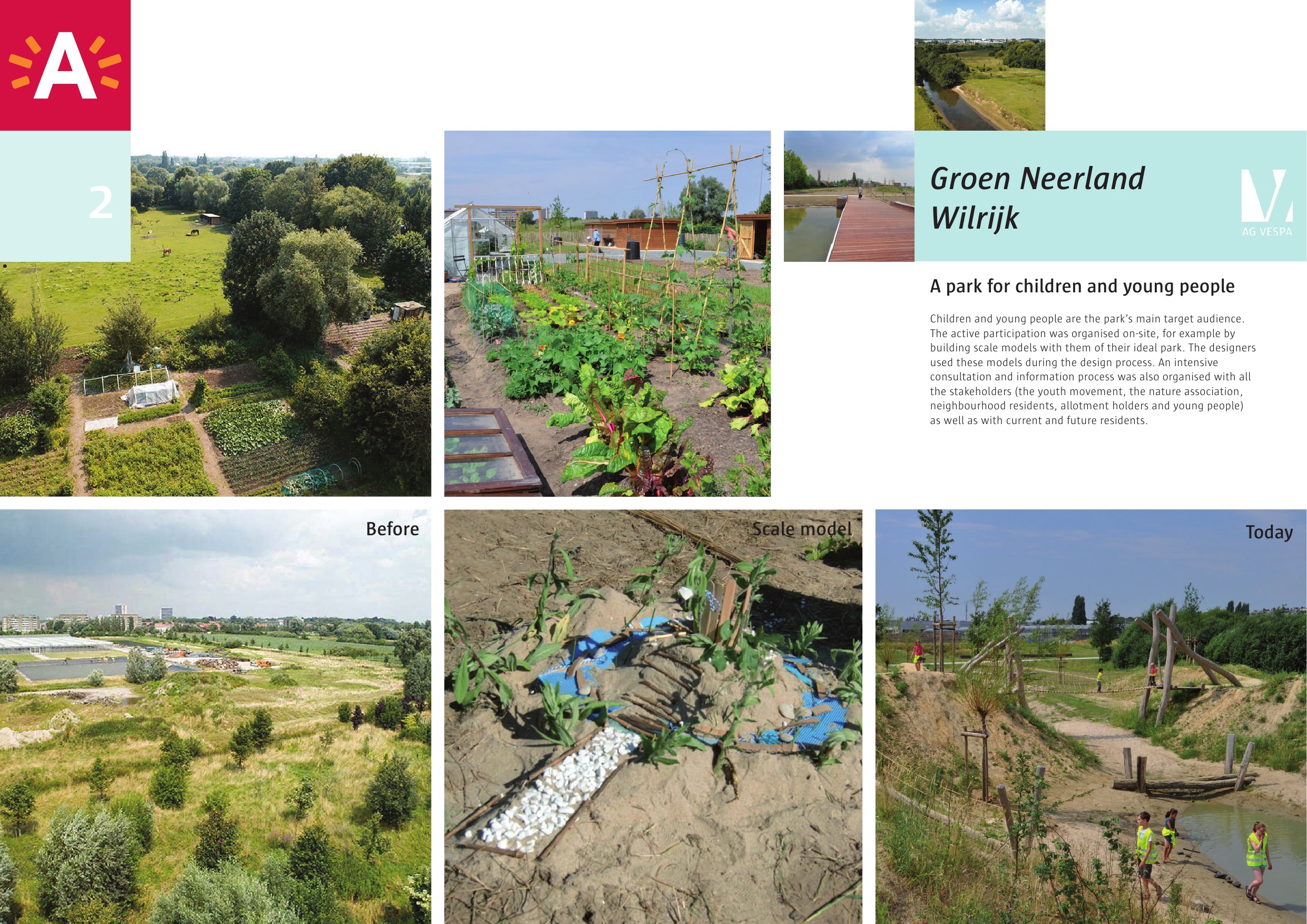
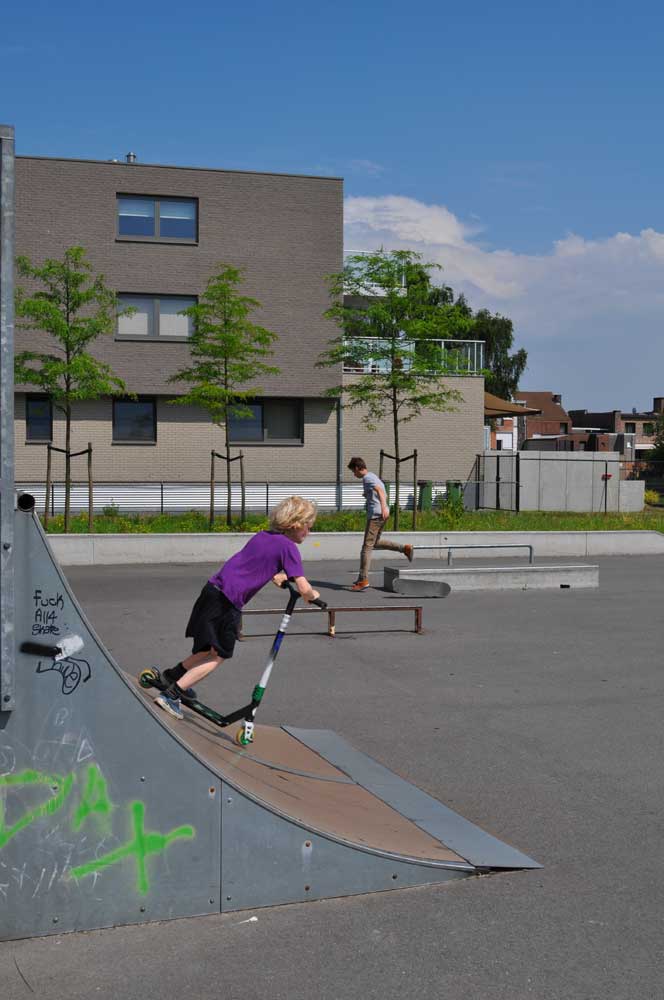
Children and young people are the park’s main target audience. The active participation was organised on-site, for example by building scale models with them of their ideal park. The designers used these models during the design process. An intensive consultation and information process was also organised with all the stakeholders (the youth movement, the nature association, neighbourhood residents, allotment holders and young people) as well as with current and future residents.
Investment
The total investment for Neerland amounts to 4 million euros.
Project management
The City of Antwerp’s autonomous town planning authority was in charge of managing the project, from the planning stage to the implementation. A deliberate choice was made to first provide access to the site before starting construction. Then the park was built and finally the buildings were added. The great advantage of this approach was that the residents would be able to take advantage of the new park much sooner and would not have to wait for the construction of the 300 housing units.
Urbanity in natural surroundings
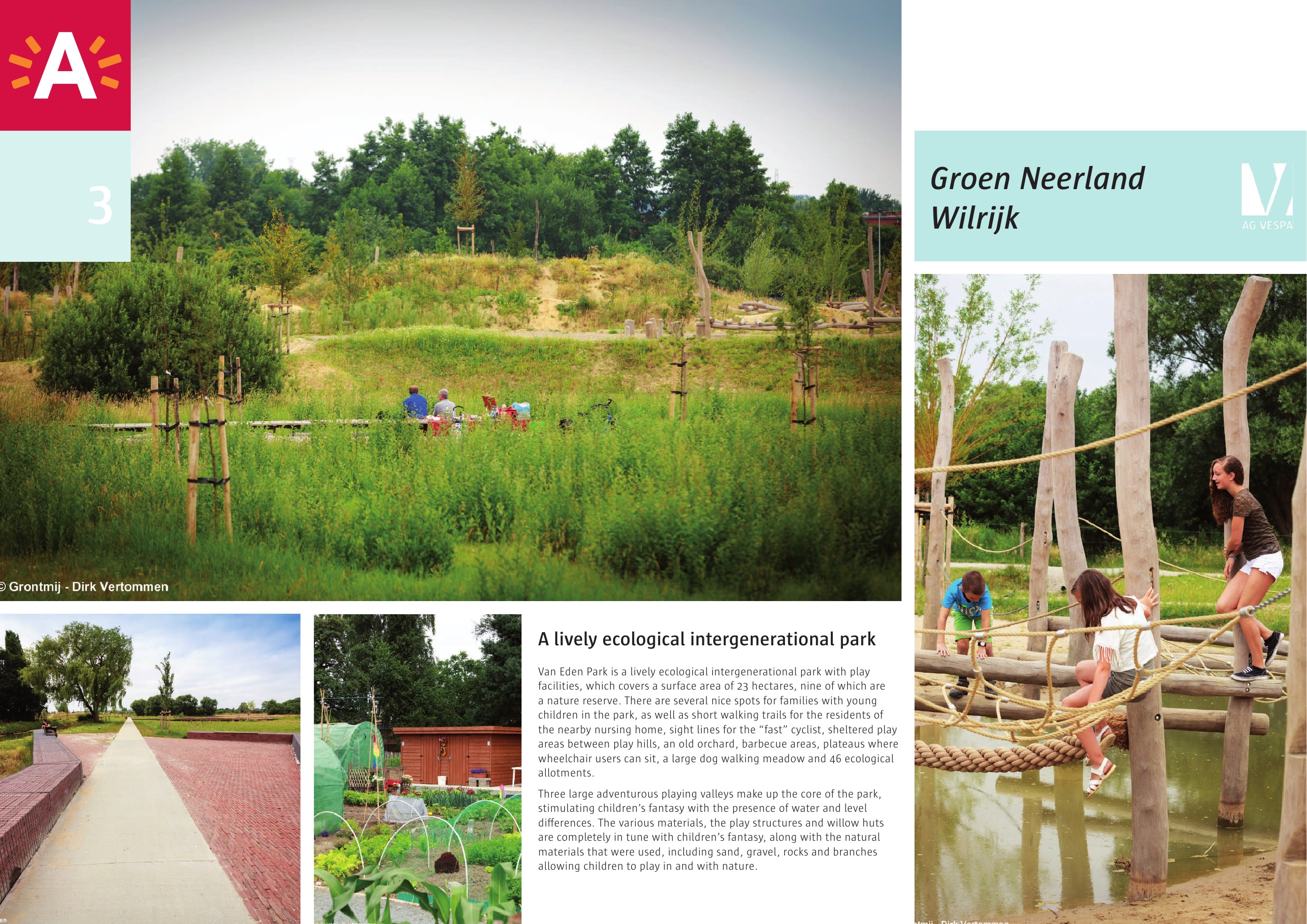
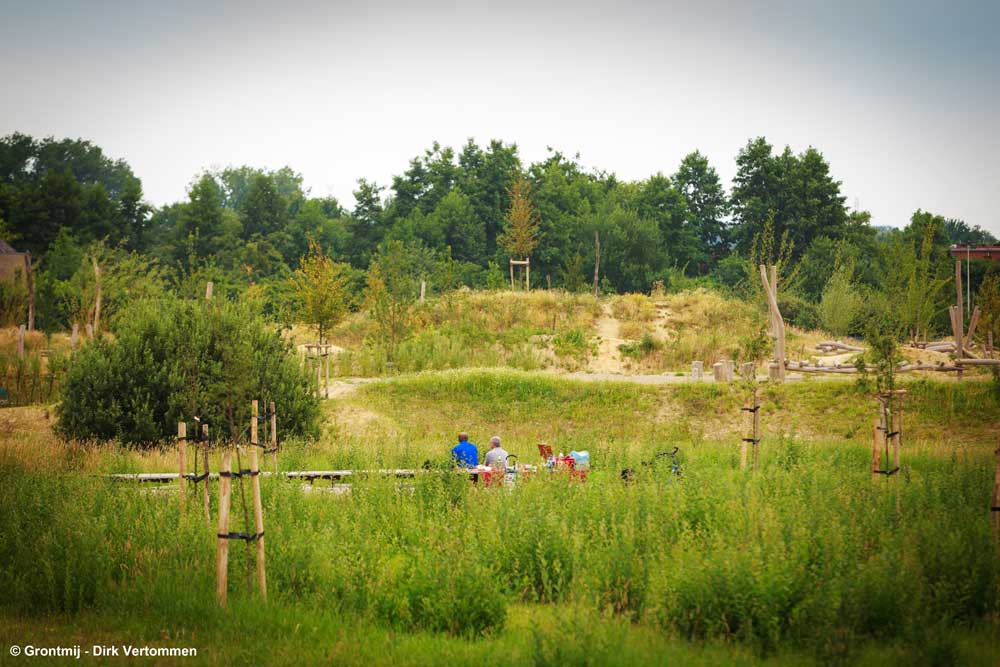
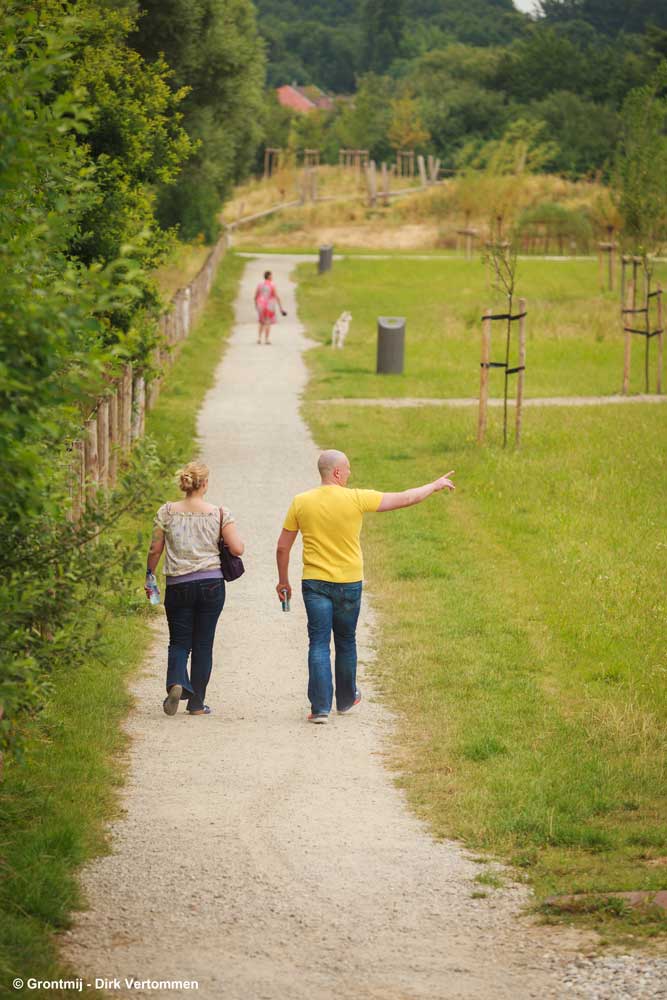
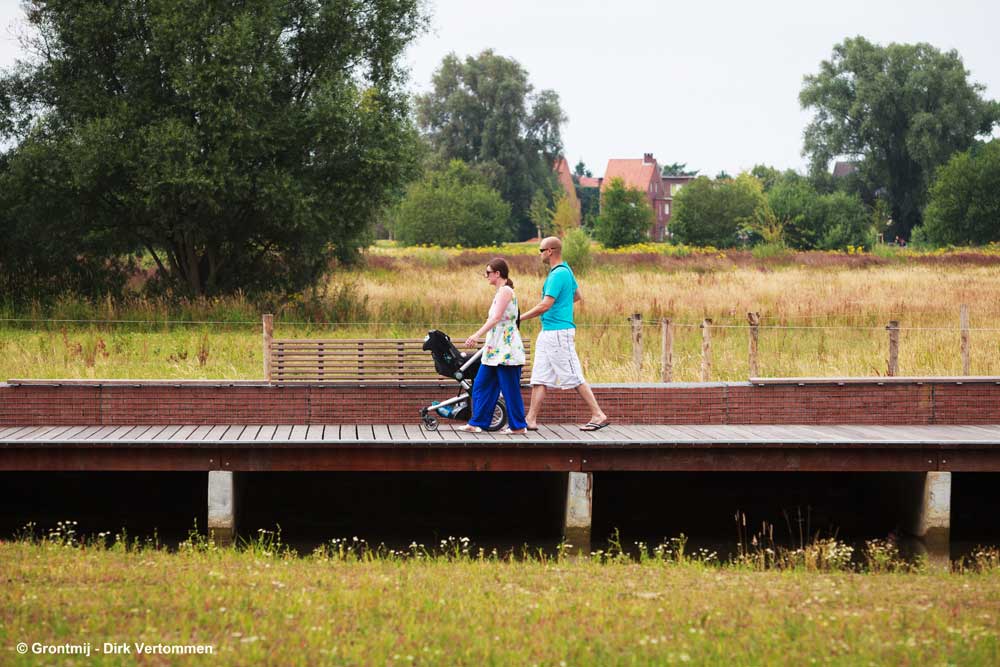
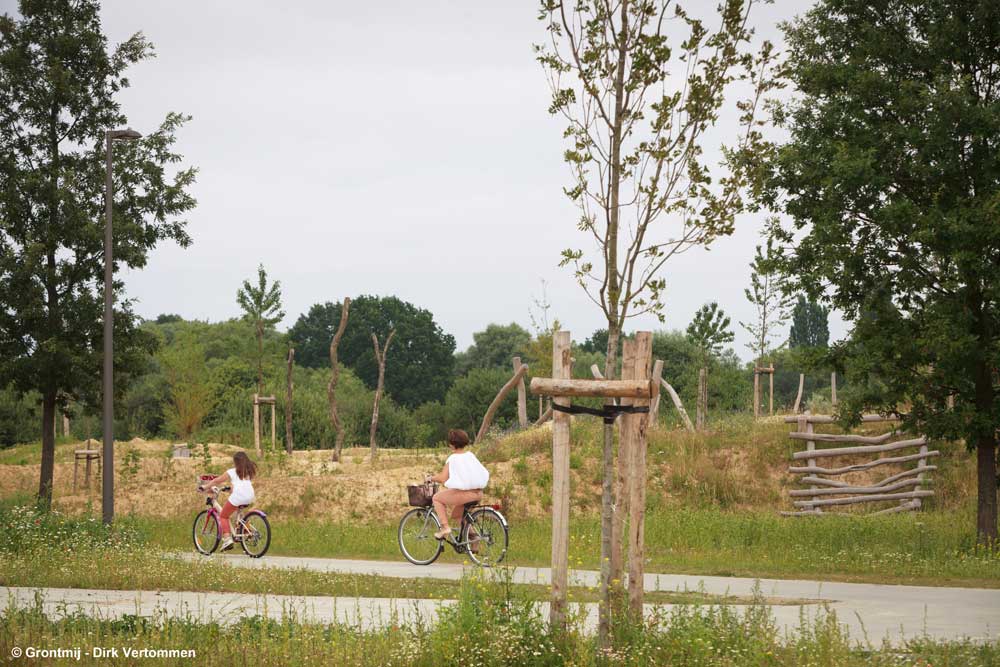
Van Eden Park is a lively ecological intergenerational park with play facilities, which covers a surface of 23 hectares, nine of which are a nature reserve. There are several nice spots for families with children in the park, as well as short walking trails for the residents of the nearby nursing home, sight lines for the “fast” cyclist, sheltered play areas between play hills, an old orchard, barbecue areas, plateaus where wheelchair users can sit, a dog walking meadow and 46 ecological allotments.
Three large adventurous playing valleys make up the core of the park, stimulating children’s fantasy with the presence of water and level differences. The various materials, the play structures and willow huts are completely in tune with children’s fantasy, along with the natural materials that were used, including sand, gravel, rocks and branches allowing children to play in and with nature.
Park van Eden as the result of a complex design assignment
The Neerland urban project is an interesting yet complex design assignment because it requires a balancing act between the preservation of the existing natural values (1), the integration of historically valuable elements (2), the need for green, open and recreational space (3), a major urban expansion for the city (4) and the demand for integrated water management (5).
Solving the flooding problems in the Neerland district was also a major challenge. Sufficient space had to be provided for the water buffering for the new residential expansion, the small business park, for surface water and seepage water.
Materials
The paths were paved with recycled materials used from the demolition of a car plant. The excavated soil was redistributed and sustainable materials, FSC timber and native plantings were consistently used throughout the park.
Diseased trees get a second life in the park as seating elements or play structures. Architectural elements that contrast with nature were built using recycled materials. The sloping walls in Corten steel introduce the transition to the architectural base with the new building volumes as well as referring to the site’s military past. The recreational areas are fenced off with gabions that have been filled with rejected bricks which refer to the factory of bricks and the clay mining in the area.
Nature education for modern urbanites
Van Eden Park brings nature closer to the people. You can clearly see the seasons change here, allotment gardeners grows vegetables in their ecological allotments, the neighbourhood residents preserve nature together, cyclists and walkers move around in a natural setting with an iconic character and a special appeal. Children playfully learn how to contribute to greater biodiversity in the educational area. It is difficult to objectively quantify the success and impact before construction starts but we can confirm that the park already attracts many visitors. One year after the park was completed the youth movement has already notified us that the number of registrations has doubled and there is a waiting list for the allotments.
| Tipologia | Intervenció en espais naturals |
| Promotor | Nv Soga |
| Promoció | P?ca |
| Localització | Antwerp, Antwerp, Bèlgica |
| Àrea | 230000 m² |
| Cost | 25 €/m² |
| Any inici | 2006 |
| Any finalització | 2013 |