



As one of the first revitalization projects since the devastation of 2005’s Hurricane Katrina, the 2.6-mile Lafitte Greenway will become a vibrant, multi-modal transportation corridor linking residents to the heart of New Orleans, Louisiana. Design Workshop led a multi-disciplinary effort—incorporating public input, synthesizing many measurable objectives and working across a range of scales—to transform an old industrial rail corridor into a celebrated open space for the city.
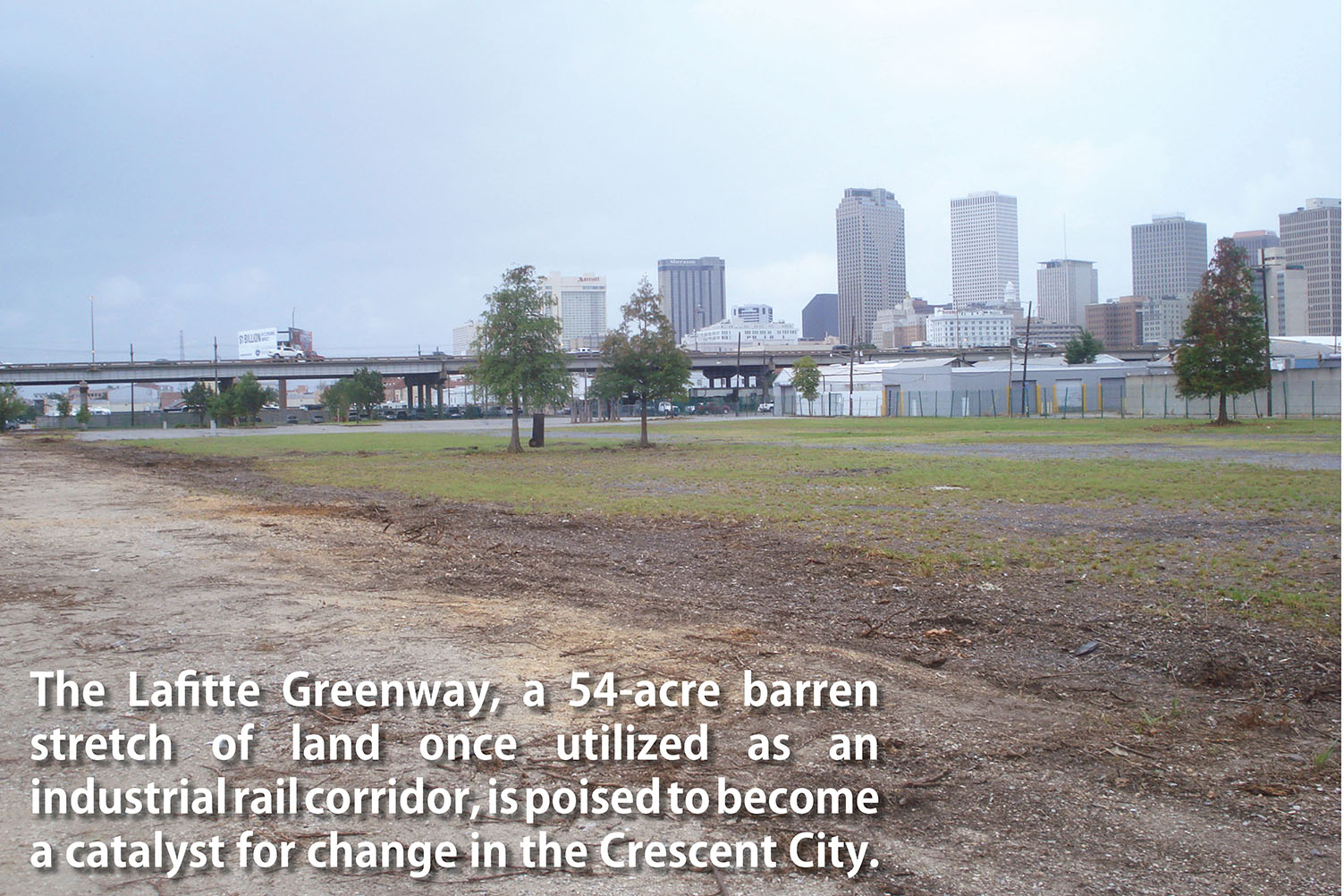
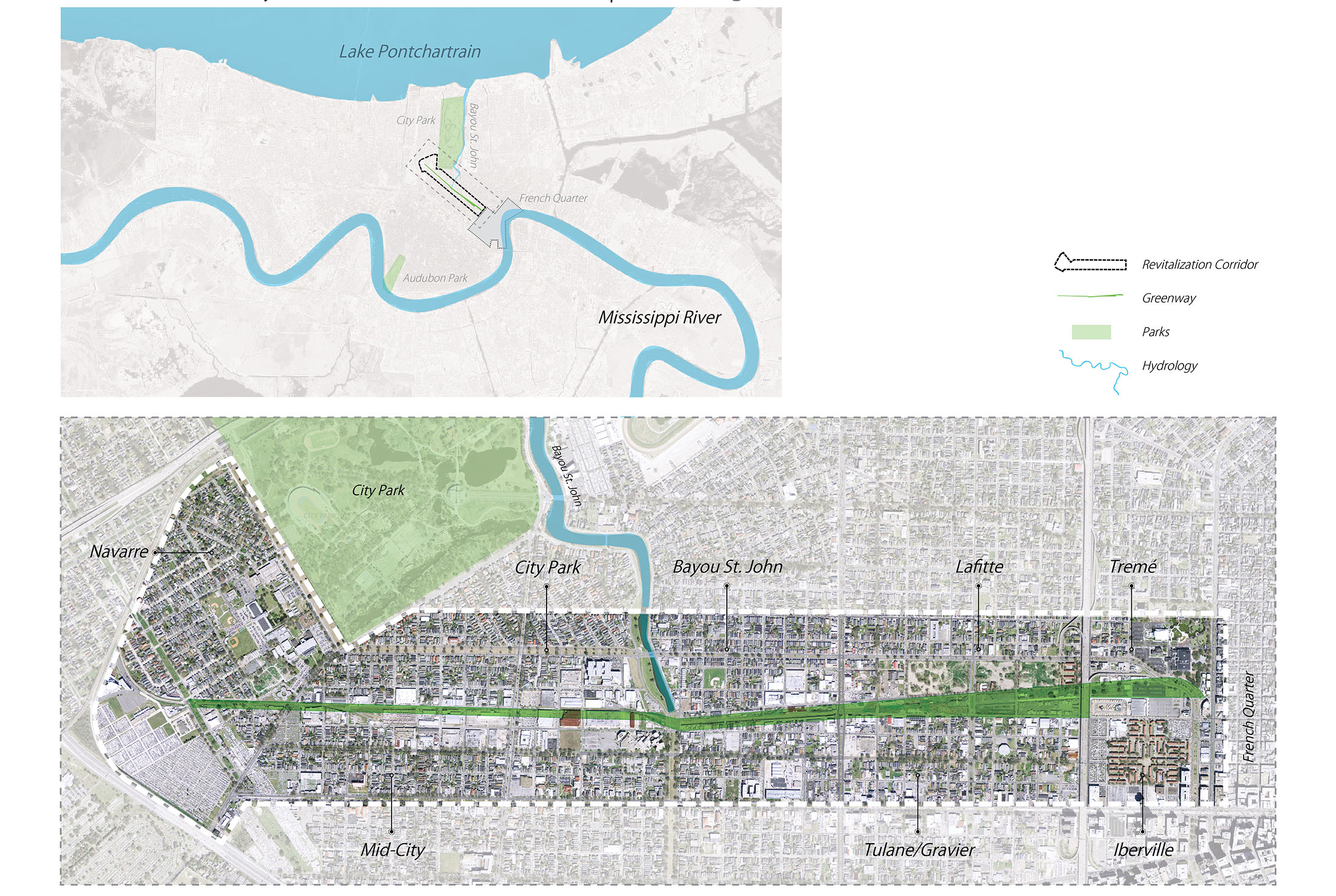
The 54-acre Lafitte Greenway was once a shipping canal and railroad right-of-way that connected the historic French Quarter to Bayou St. John and Lake Pontchartrain. The Lafitte Corridor is a 1,375-acre district that includes the Lafitte Greenway and a rich mix of residential, retail and industrial uses. The Corridor contains 13,583 residents and traverses a cross-section of the city reflecting 200-year settlement patterns ranging from the colonial-era settlement of the Vieux Carré to the mid-twentieth century suburban neighborhood of Mid-City.
The City of New Orleans retained Design Workshop to complete four comprehensive efforts: 1) the Lafitte Greenway Master Plan; 2) the Lafitte Corridor Revitalization Plan; 3) Operations and Maintenance Plan; and 4) Construction Documents for the Greenway. This extraordinary effort required the design team to assess the role of the Greenway within New Orleans as a whole, identify a revitalization strategy for the entire Corridor and create a detailed design for the implementation of the Greenway. The consultant team planned and designed at these three distinct scales but also advised on the important management, budget and operations of the Greenway.
The connection of the Greenway to the community was guided by five overarching principles related to the site’s history, environment, economics, community and art. This comprehensive approach was paramount to the rigor and success of the project resulting in a richly layered plan linking nine neighborhoods, parks and open space, drainage corridors and transportation routes while celebrating the history of the site through the physical design.
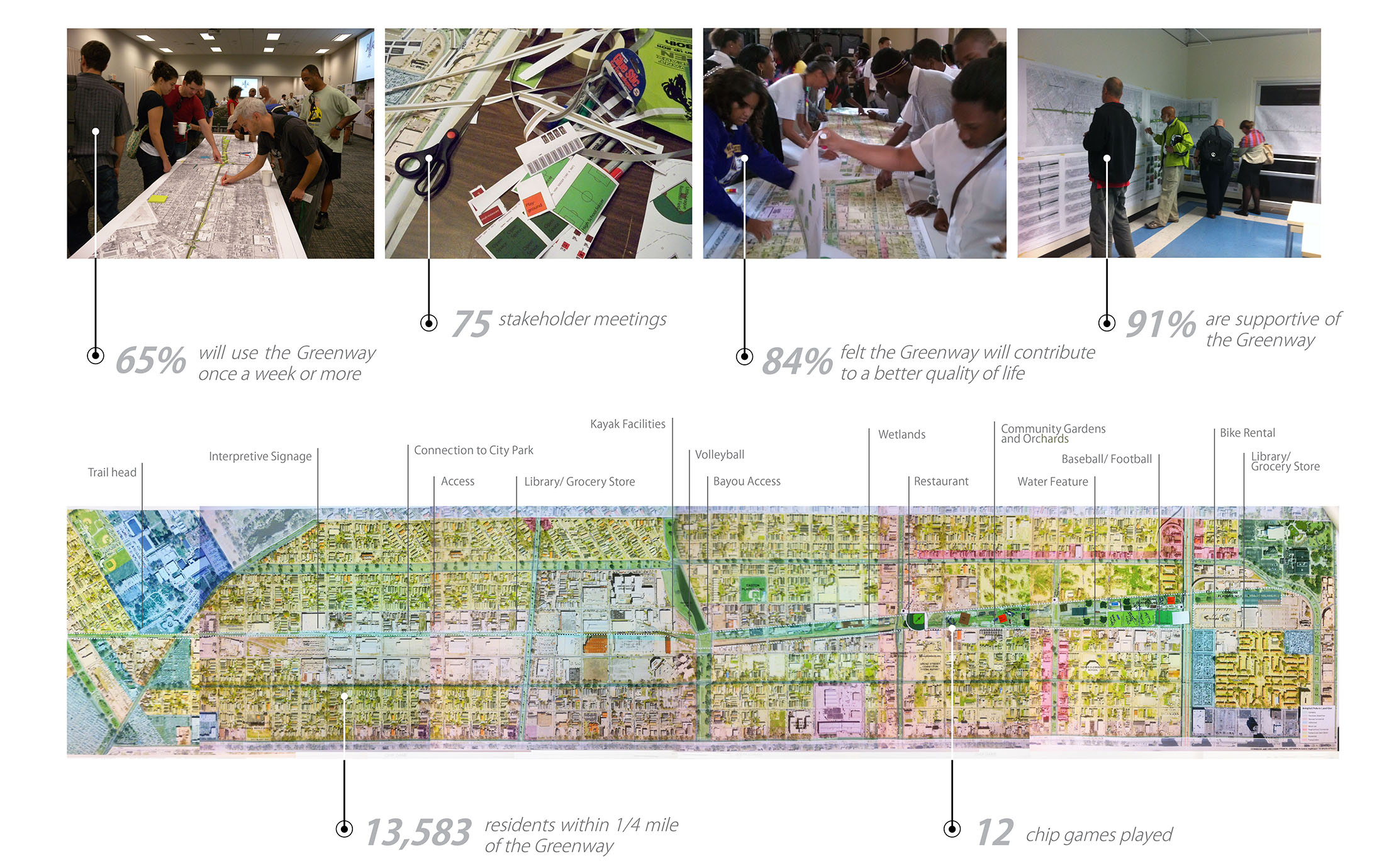
The Lafitte Corridor comprises nine vastly different neighborhoods with a spectrum of socioeconomic conditions and racial compositions, creating a challenging context for community engagement. The overall planning strategy involved convening dual meetings at a series of three public events in order to capture the entire study area allowing the community to feel comfortable attending events near their homes. More than 75 stakeholder meetings among community leaders, elected officials and neighborhood organizations were held as part of a strategy of listening to the community and designing a plan that was truly supported by the final users of the Greenway.
The Lafitte Greenway project has affected local perceptions of public planning, policy implementation and community engagement becoming a model for future planning processes in New Orleans. It is being used as a national model for demonstrating the effectiveness of participatory planning and environmental stewardship for greenway design. Founded on the principles of advocacy, economic development, environmental responsibility and neighborhood connection, the Lafitte process has been integrated into academic design studios at several local universities.
The overall Greenway design concept draws upon principles of historic ecology and builds upon the rich layers of the site’s history. Prior to urbanization, New Orleans was covered by a Cypress tree forest and swampland. Restoring the site’s ecology to bottomland hardwood forest and native plantings was integral to repairing the barren landscape.
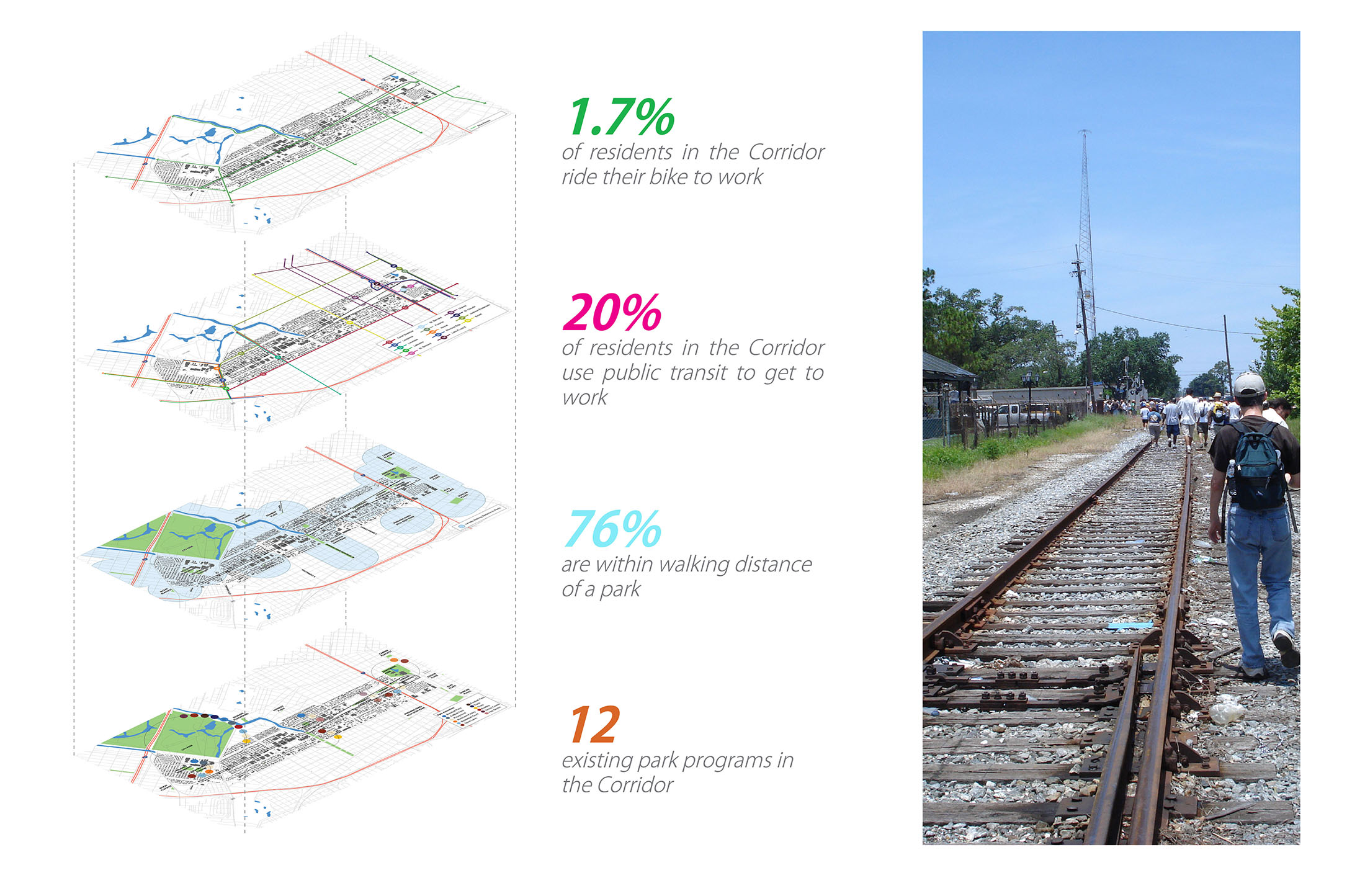
The Lafitte Greenway was one of the first planning initiatives in New Orleans history to use comprehensive, environmental planning as the impetus for increasing the city’s inventory of recreational green space, for connecting neighborhoods within a three-mile corridor, and for encouraging economic development among neighborhoods slow to recover from Hurricane Katrina. Specific attention was given to connect the Greenway to existing parks and open spaces within the Corridor to provide programmed activities to correct the current deficiency. A detailed analysis of existing program elements was undertaken to assess quantity and quality of recreational spaces such as multi-use recreational fields, open lawns, trails, and children’s play areas. This analysis revealed there was not only a lack of parks and open space in the Corridor, but also a lack of quality ball fields for the community. Following the final construction of the Greenway, 100 percent of the Corridor residents will be within walking distance of the park and surrounding open space of the Greenway.
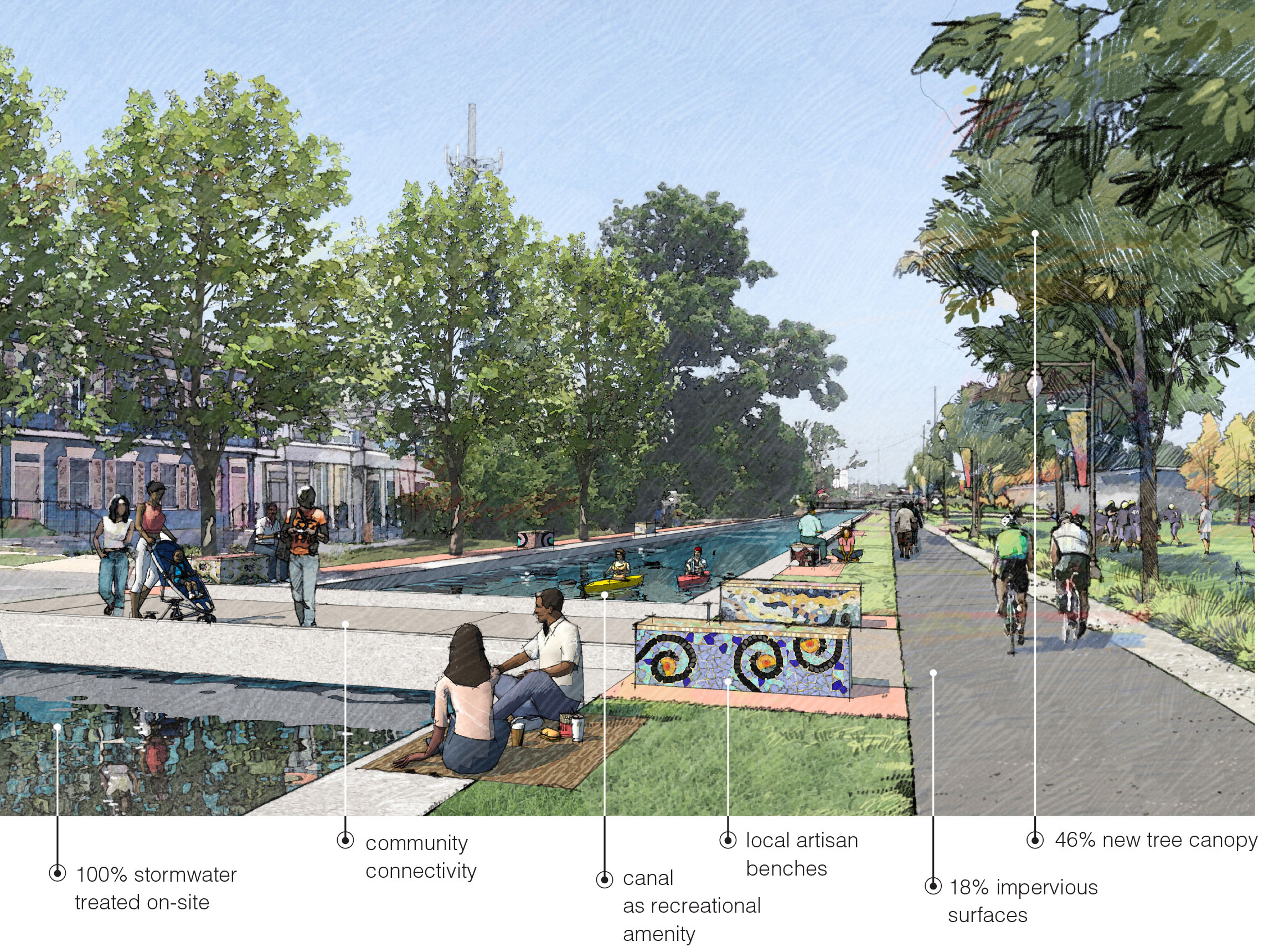
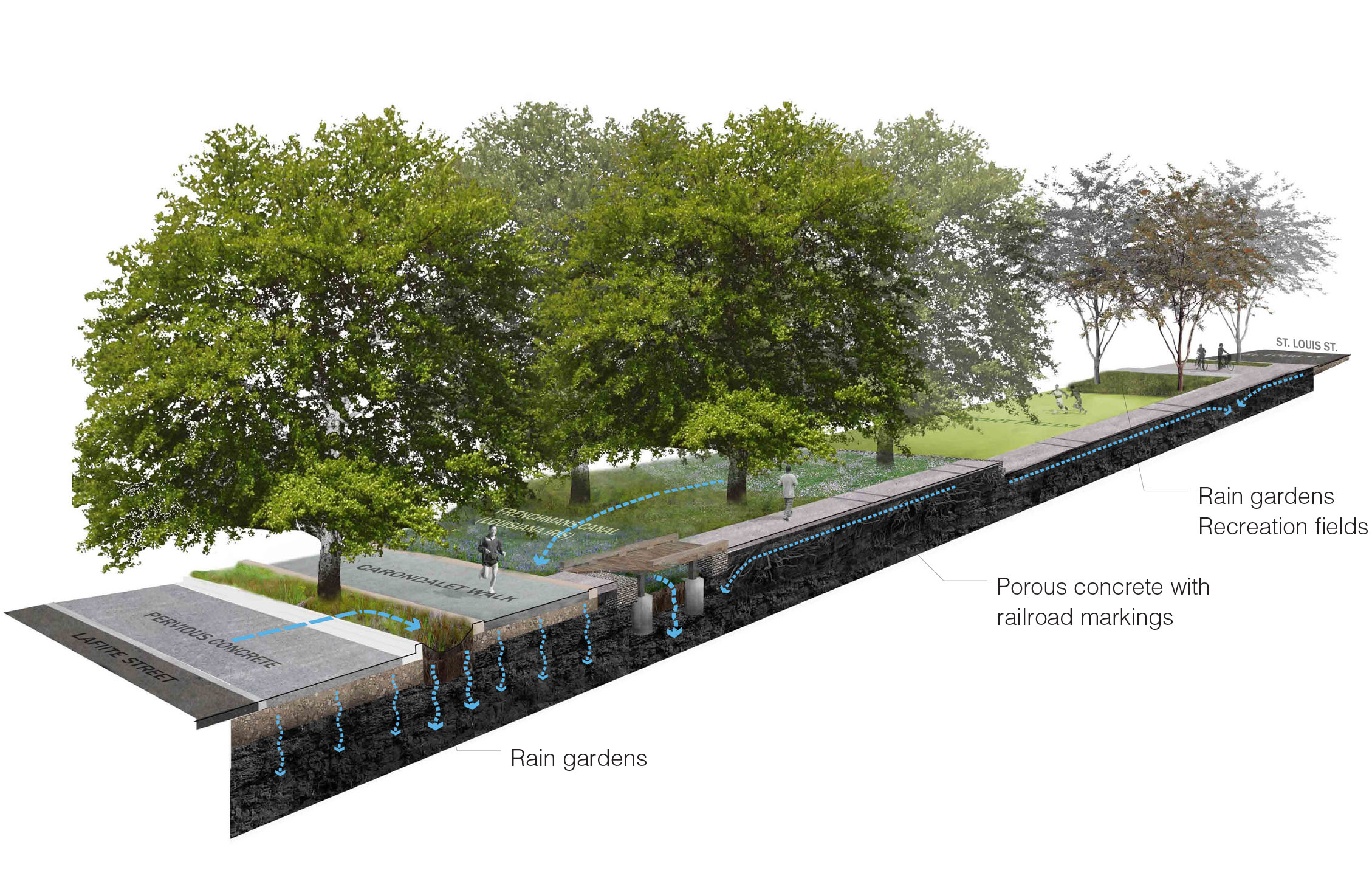
The design for the Greenway incorporates sustainable design through native and rain garden plantings, the reduction of impervious surface, and the dramatic increase of vital tree canopy to provide shade for trail users. Currently, the Greenway is a vegetation-less landscape with a mere three percent tree canopy that has largely been forgotten about from an environmental standpoint. Fencing around the derelict site eliminates the possible use of the space, as there is no maintenance or security of the open space today. Emphasis is placed on revegetating the land with turf, meadow grasses, rain garden planting mixes, and a diverse tree planting plan that will help restore the missing tree canopy. The plan will include a diverse range of tree plantings that will increase the tree canopy to 46 percent of the site. To identify the rhythm of the Greenway and provide distinguishing features, tree species were carefully identified and placed along cross streets.
Only $6.5 million of an estimated $25 million construction cost is available to implement the full planning and design vision of the Greenway. After two years of planning and design, the consultant team delivered the Lafitte Greenway Master Plan, Lafitte Greenway Revitalization Plan and the Operations and Maintenance Plan.
The design of the Lafitte Greenway successfully responds to the needs of adjacent communities and replenishes this barren stretch of land into a lush, vibrant open space. Most importantly, the Greenway capitalizes on underutilized public space and gives back to the City of New Orleans, bringing its citizens together on common ground. By taking a comprehensive approach to analysis and implementing a robust planning process, the Lafitte Greenway considers all voices of the people and breathes life into an iconic urban place.
| Tipologia | Intervencions urbanes |
| Promotor | City of New Orleans, Louisiana |
| Promoció | P?ca |
| Localització | Louisiana, New Orleans, Estats Units d'Amèrica |
| Àrea | 244800 m² |
| Any inici | 2011 |
| Any finalització | 0 |