


PRELUDE OF THE 1911 CHINESE REVOLUTION (XINHAI REVOLUTION)
In commemoration of the revolution of 1911 (the Chinese bourgeois democratic revolution led by Dr. Sun Yat-sen which overthrew the Qing Dynasty), the Urban Renewal Authority has commenced the Pak Tsz Lane project to celebrate Hong Kong’s link to the Revolution.
Located at a district full of historical, cultural and social significance, among the neighborhood of Central and Western district on Hong Kong Island, Pak Tsz Lane was an unnoticed blind alley surrounded by old tenement buildings and busy streets. As one of the nodes on Dr Sun Yat-sen Historical Trail mapped to introduce his activities in the territory and highlights his close tie with Hong Kong, Pak Tsz Lane was home to Furen Literary Society which influenced the pattern of modern Chinese history, and its founder had also joined Dr Sun’s Revive China Society (XinZhongHui). Its strategic position had made Pak Tsz Lane a post where frequent revolution meetings took place, and hence known as a cradle of the Revolution.
DESIGN CONCEPT (OUTDOOR MUSEUM) & APPROACHES
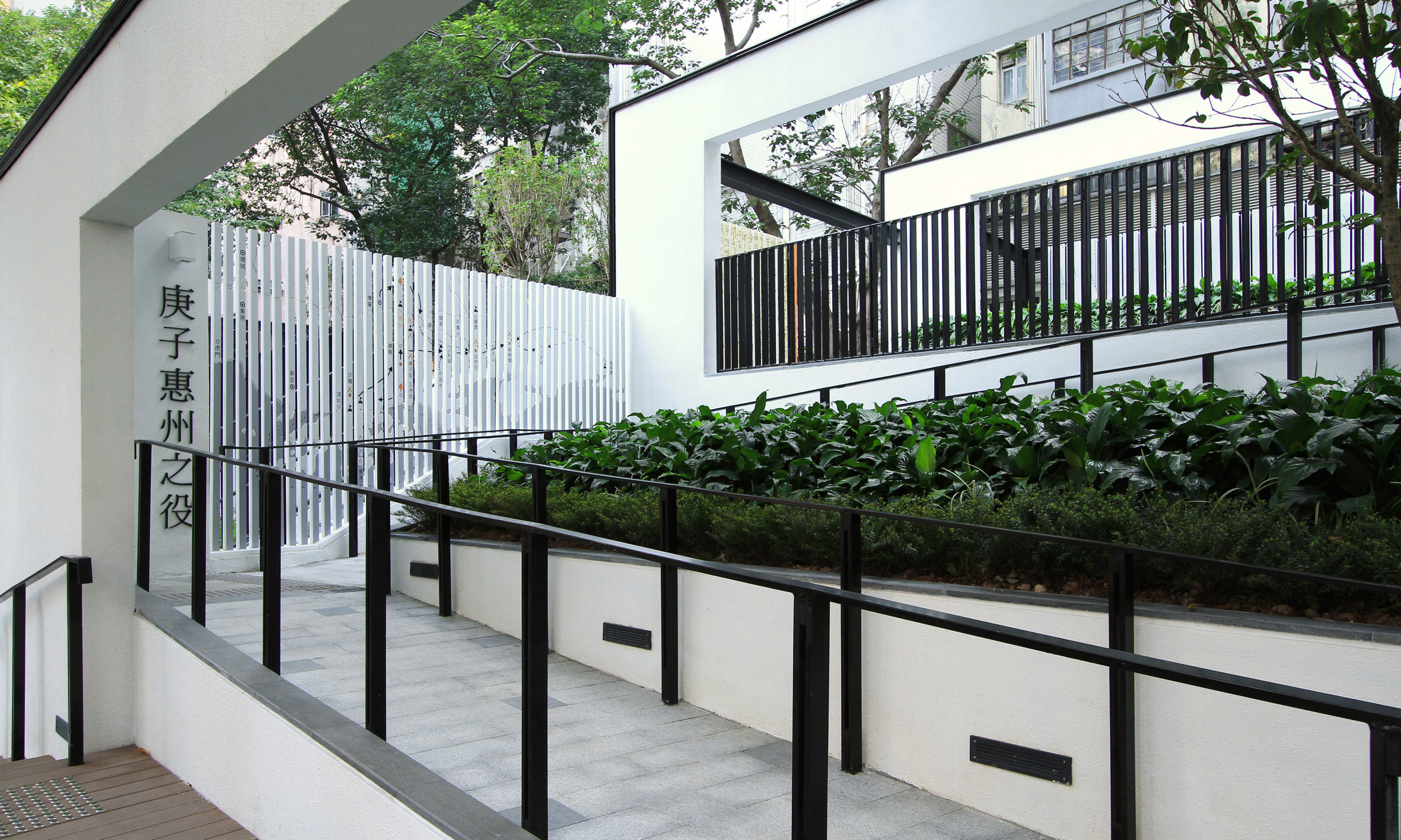
The historical and cultural background of the site has formed the centre of the design concept and approaches, that Pak Tsz Lane is revitalized to become a park in Central district to retrace the old urban fabric and the veiled Furen Literary Society. The “Origin of Chinese Revolution” was therefore adopted as the design theme for the Park.
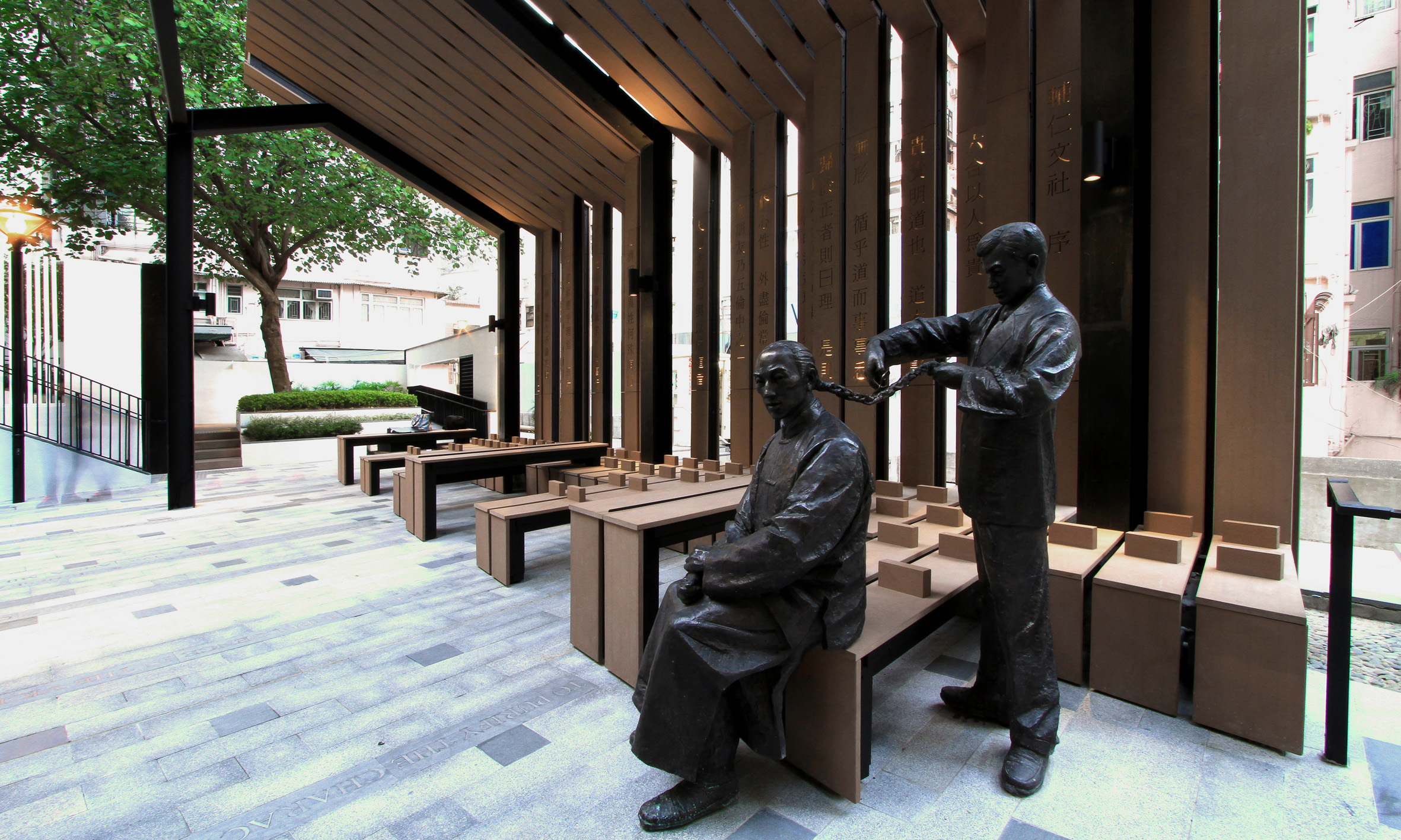
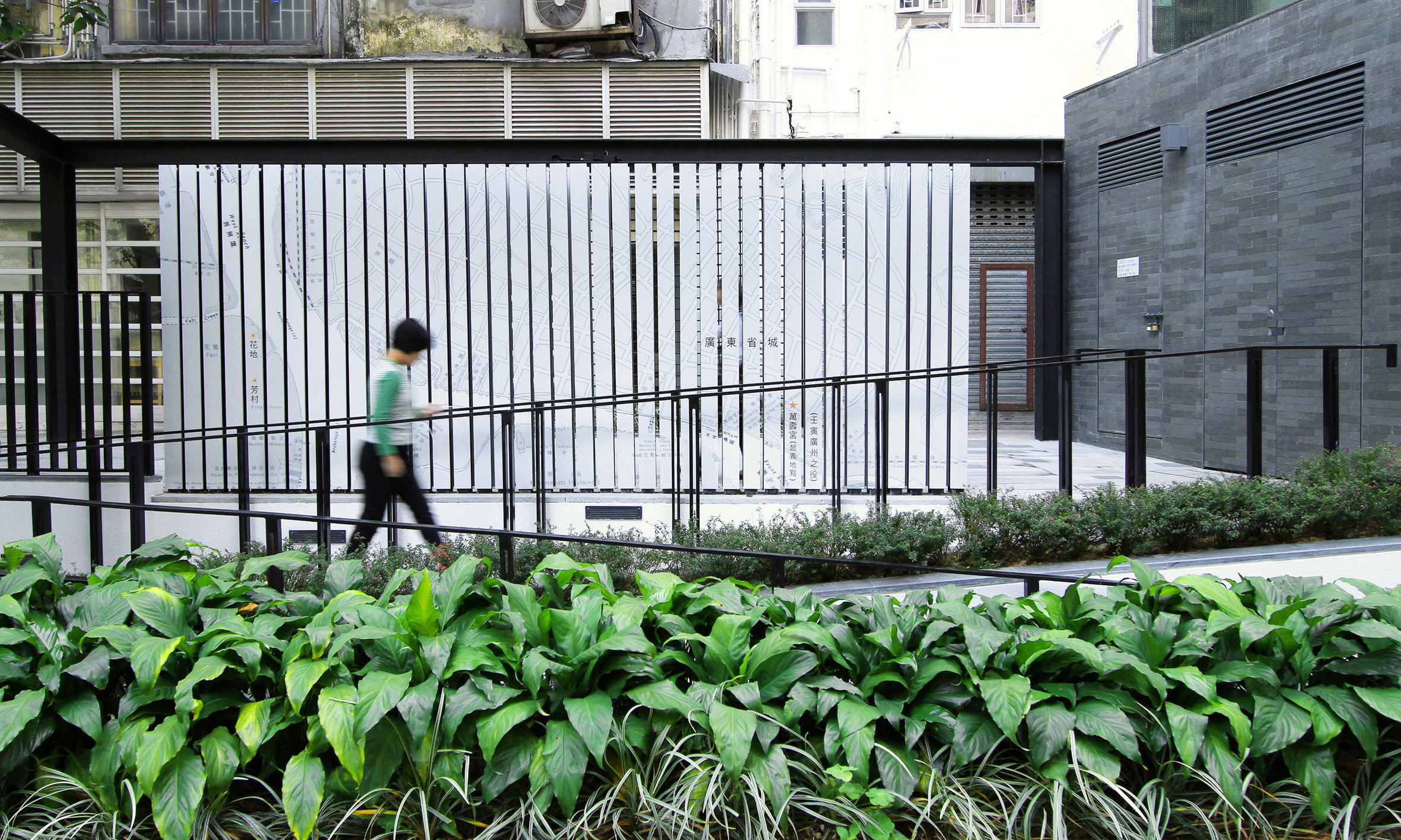
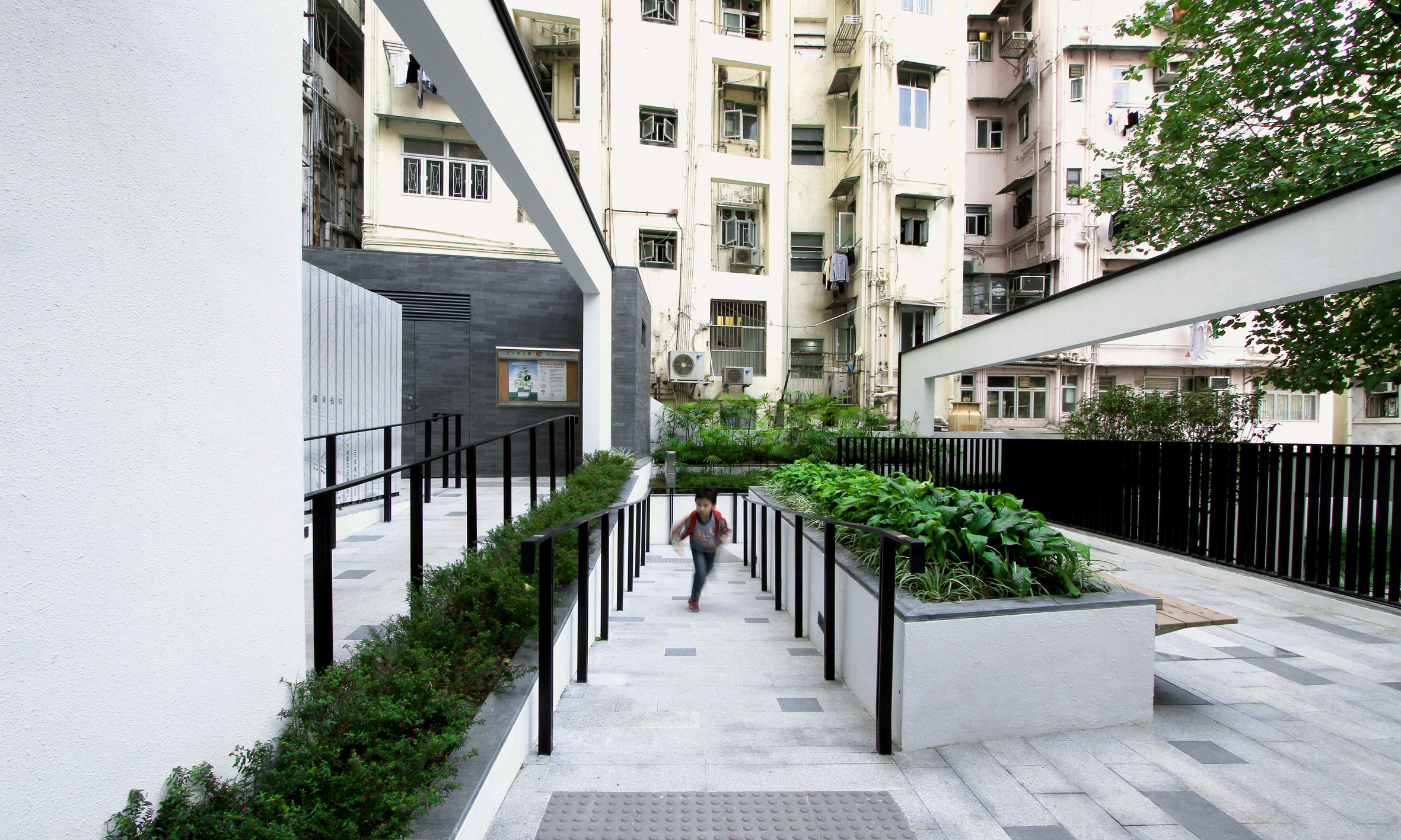
The concept calls for a variety of exhibition items and spaces to create a clear address for the tangible and intangible heritage and, simultaneously, to give the entire space a distinct identity, to provide a sequential route for visitors to experience the history and to enhance the characters of Pak Tsz Lane laneway. At the same time, laneway entrances, enclosed open space and the terraced walkways form a unique space for enjoyment, recreational and communal aspiration. Users are encouraged to stay and to appreciate the history, and the Park also brings both locals and tourists to experience the rich historical and cultural aspects of Hong Kong.
The Park comprises three main sections: a feature pavilion area, an exhibition corridor and a historically themed play area. Apart from the green elements, sculptures and recreational facilities, the Park also incorporates exhibition features and interactive facilities tracing the progression of revolution. While the site is adjacent to the old gathering place of the Society, the division of “exhibition rooms” in the Pak Tsz Lane Park reflects the historical aspects of the site, imitates the revolutionary room, and recongregates the spirit of revolution. The ambience of Pak Tsz Lane in early years is recreated, and the visitors are encouraged to walk through the old footprints and to learn about history.
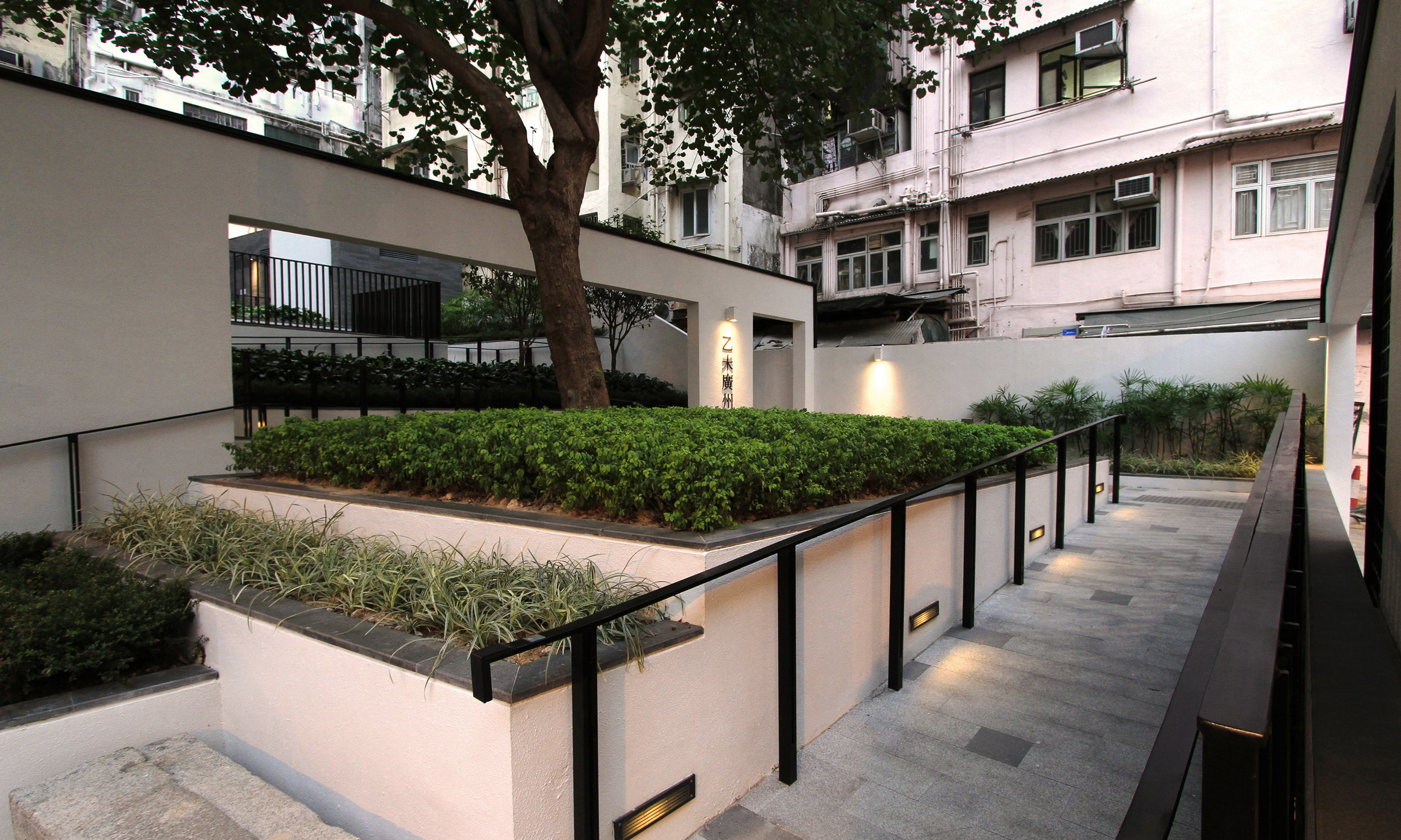
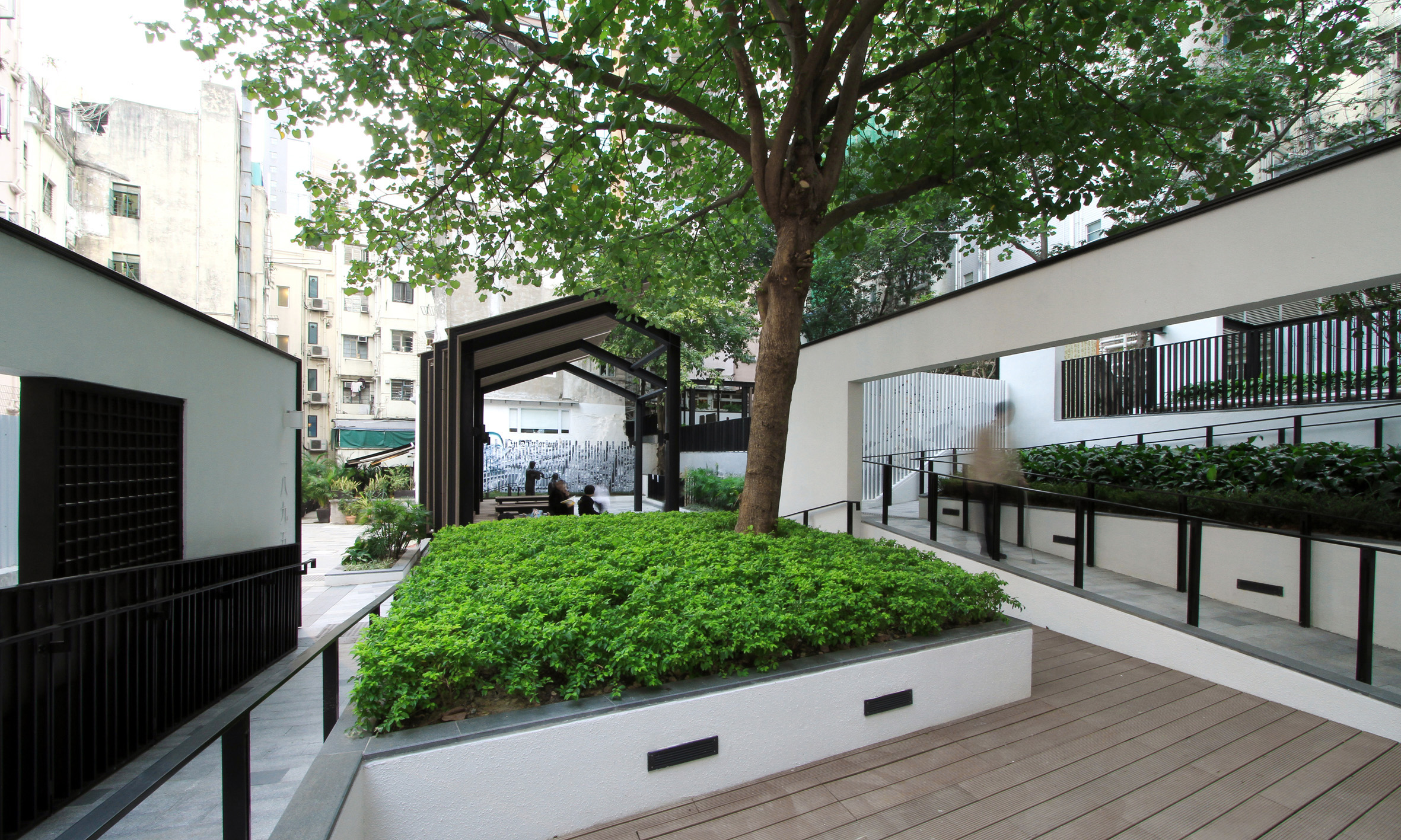
One of the biggest challenges was to solve and to enhance the enclosed site character. In order to create a larger spatial experience, a decision is made to design a framed environment with several garden rooms and extended walking experience, instead of an open environment. Therefore, feature partition walls work as the elements to retrace the footprints of the site, and to reinforce the spatial relationship with the surrounding and the Park itself. The heavy design language is inspired by the significant background of the site, and is demonstrated in the railings, walls and pavilion, to create a weighty and secrete feeling to the visitors. At the same time, the planting and paving design are straightforward and clean to balance the overall atmosphere, and to unify the divided rooms.
Another big challenge was to retain all of the existing trees during construction, within the small and enclosed site. The trees are preserved to demonstrate the importance of environmental conservation in rapid urban renewal and development. Design is adjusted in according to the trees and site condition throughout all stages of design and construction. An old residential well was also discovered and retained. Together with the new trees, the Park achieves 70% canopy coverage. Thus, tree preservation and the awareness of the historical and cultural aspects have taken a crucial role in the Project.
The Project binds together the individual buildings and sustainable developments in the district. The revitalization work promotes visual linkage at different levels, as well as accessibility for various local populates and tourists visitors. In addition, it raises the public awareness of the local history, that connecting the past and creating the future by forming a comprehensive urban design network for the district.
* text can be provided in Word file
* presentation panels and more high resolution images are also available and ready upon request
Award:
- The Hong Kong Institute of Landscape Architects, Silver Award 2012
- The American Institute of Architects (Hong Kong Chapter), Merit Award for Urban Design 2013
- Hong Kong Design Center, Design for Asia Award, Bronze Award
| Tipologia | Parcs urbans i metropolitans |
| Promotor | Urban Renewal Authority, Hong Kong |
| Promoció | P?ca |
| Localització | Hong Kong, Hong Kong |
| Àrea | 1600 m² |
| Any inici | 2009 |
| Any finalització | 2012 |