



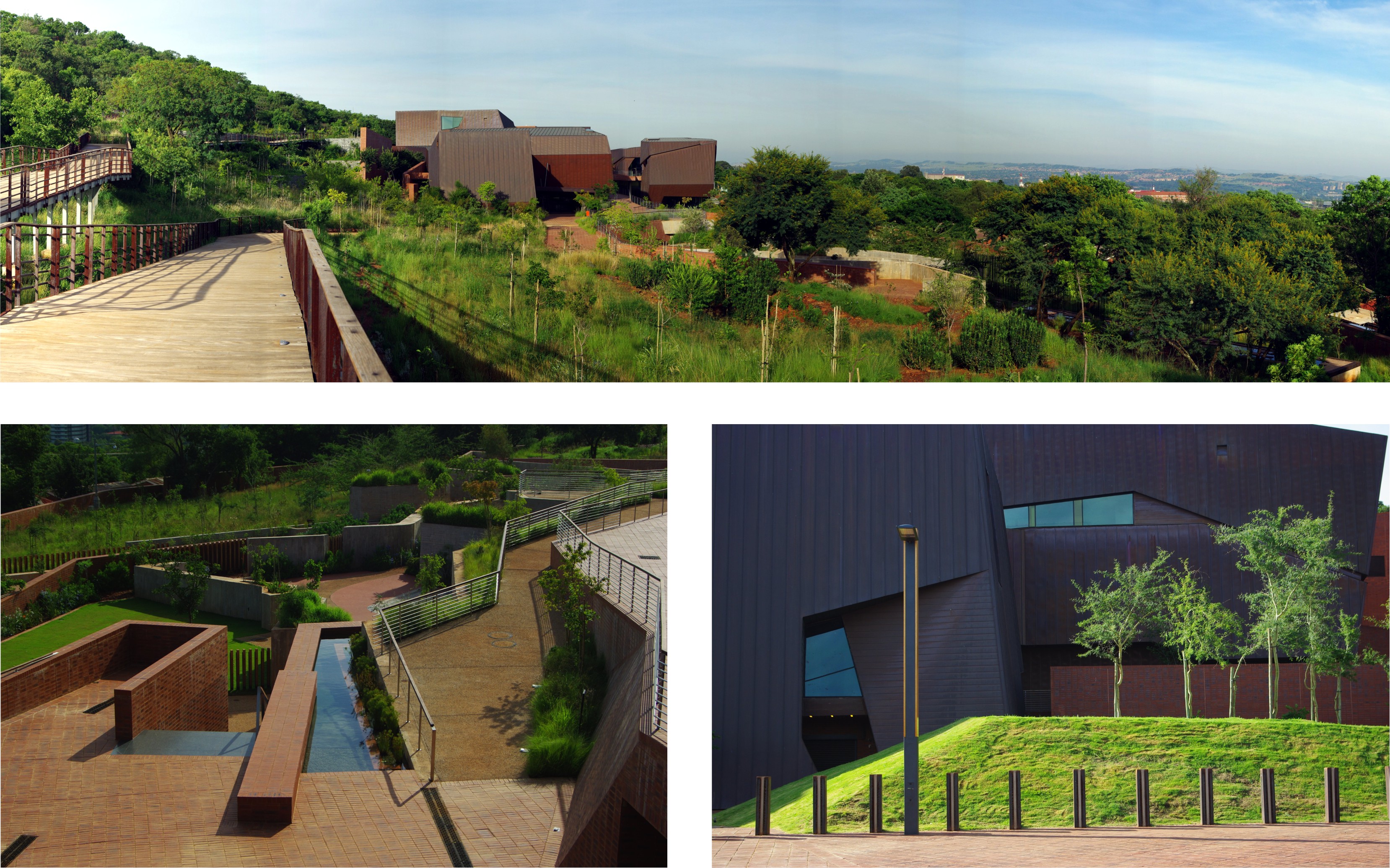
Freedom Park, Tshwane, South Africa
Freedom Park is a place where African philosophy and landscape design have informed each other such that an exciting new cultural landscape has emerged. It is a landscape that engages people spiritually and challenges their perceptions of the past and their dreams for the future of South Africa. Its vision is structured around four key ideas: reconciliation, nation building, freedom of people and humanity. The making of the park and its landscape sought to recognise the origins of these ideas, and manifest them in symbolic physical form. ‘The decision to make a place of gardens within the garden of the Salvokop hill and in turn within the vast garden that South Africa is, and in memory of the long struggles for freedom and humanity, rather than a conventional monument of victory or victimhood, is significant. It encapsulates a vision which seeks to embrace all the people of South Africa in a project aimed at asserting and giving expression to an intensely felt need throughout the country to restore and amplify the long-denied African voice’.
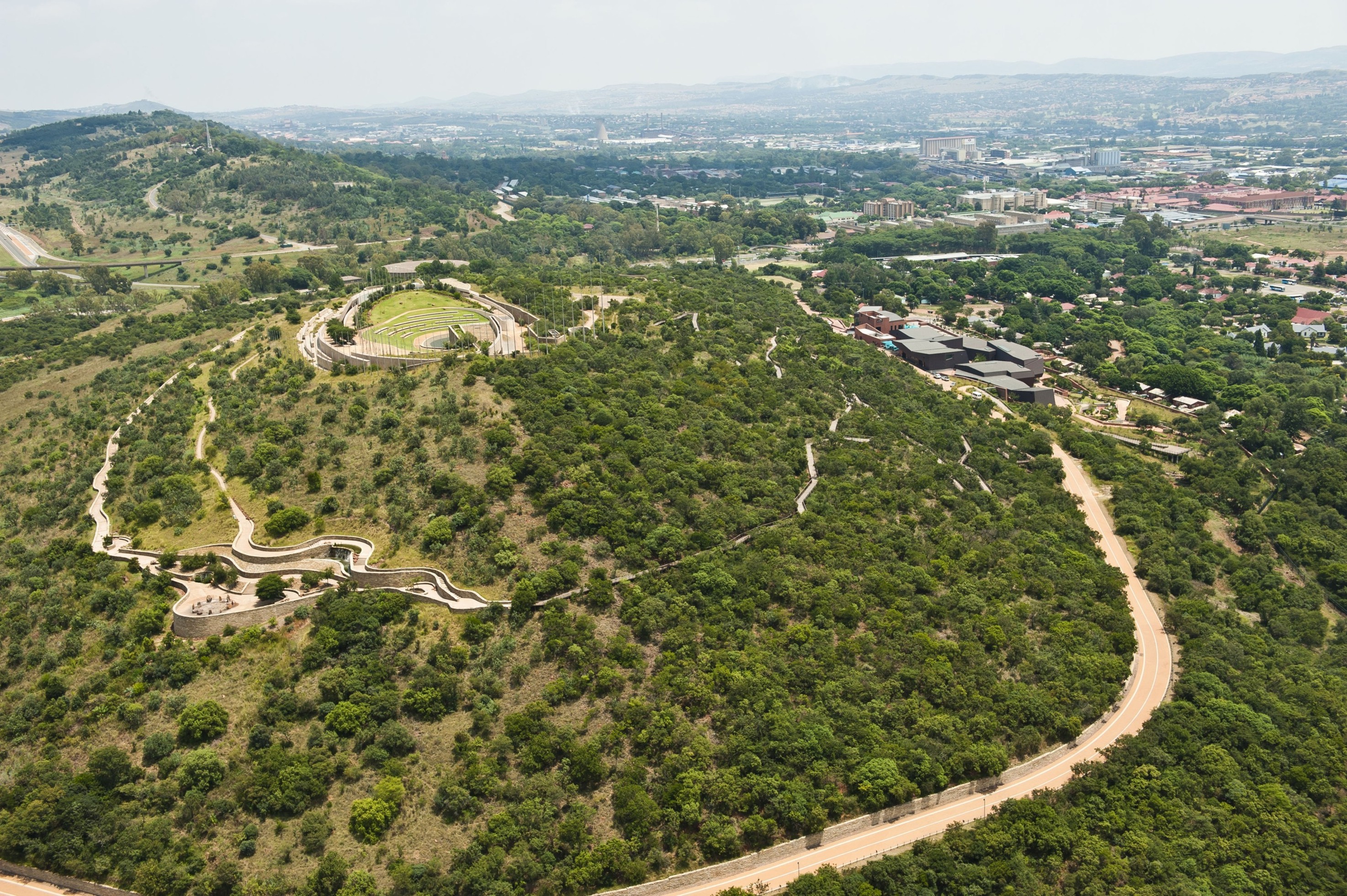
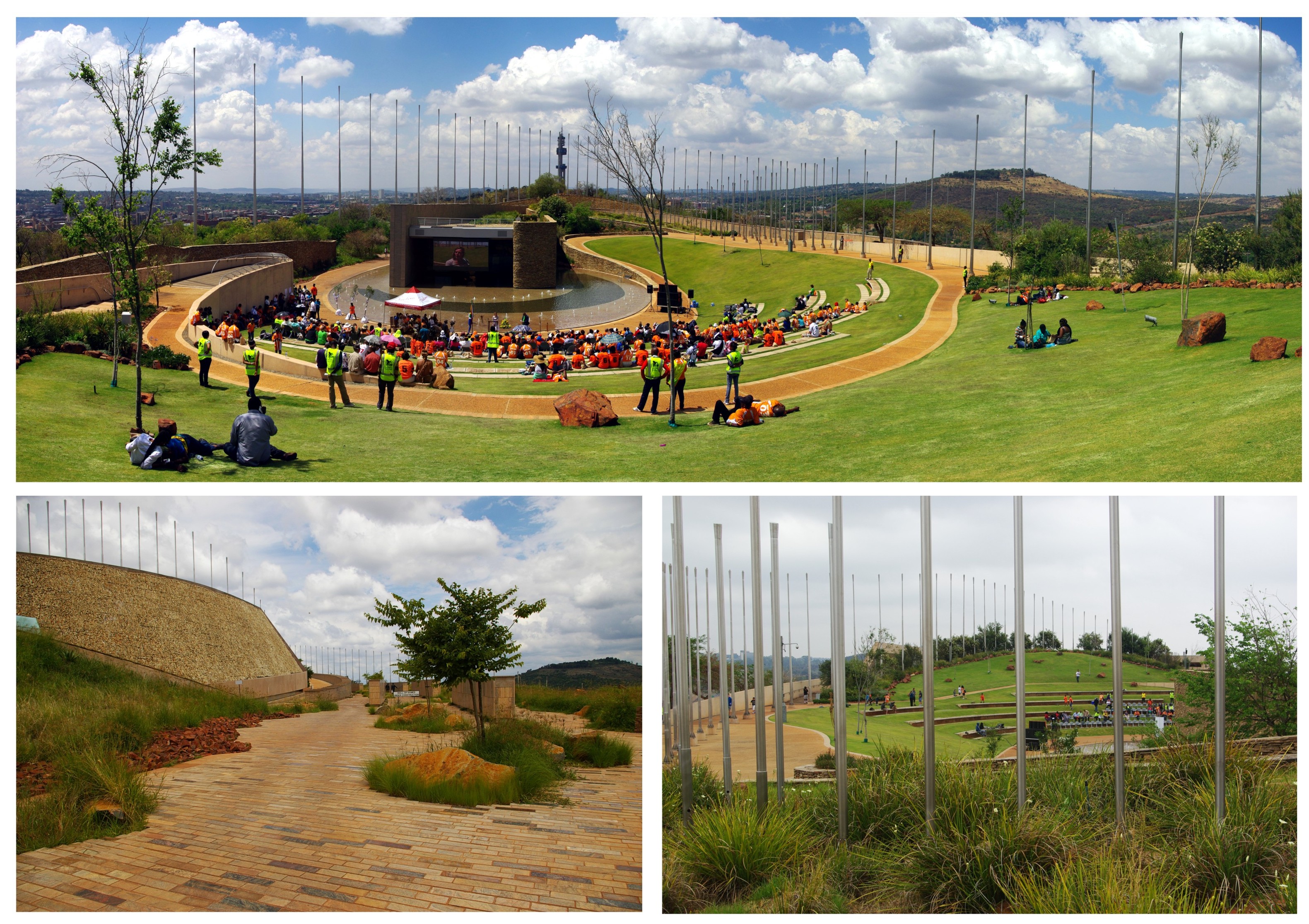
The designed landscape, described as a Garden of Remembrance, is integrated into the ecological structure of the site and includes symbolic places for cleansing and healing (Isivivane), a memorial and sanctuary (S’khumbuto), an interactive museum (//hapo), a gallery of leaders, an archive, an outdoor amphitheatre, a hospitality suite for visiting dignitaries (Moshate) and a rest area (Uitspanplek). These places are connected through a universally accessible ramp system (Vhuwaelo) that winds up the hill from the entry point at //hapo.
The landscape architects sought to introduce a cultural sensibility of African symbolism through a narrative of abstract expression based on collective rather than particular values. Given this objective it seemed proper that the South African story could effectively be told through the medium of landscape – the common bond of all South Africans. The plot for the cultural narrative starts by making reference to the natural processes and restoring the semblance of an original natural order to the site. Although the site was relatively healthy, it had been impacted with pine and blue gum plantations and aggressive weed invasion. The ecological sensitivity of Salvokop is high and it was important to conserve, restore and regenerate as much of the hill in its natural state as was possible, specifically the quartzite ridgeline, and locate development away from sensitive areas. Thus any new intervention was to integrate with existing natural features.
The design narrative begins with an ecological reading of the site and ‘letting its nature reveal itself’. An ecological analysis was commissioned which led to the mapping of the site into sensitivity zones. Architectural and landscape interventions where then planned to avoid the sensitive areas. And the most disturbed areas were where major interventions took place. S’khumbuto was located along the ridge in an old quarry area and to avoid the remains of Fort Tullichewan, while //hapo was located at the bottom of the hill immediately adjacent Salvokop Village where the impact of alien vegetation had taken hold. The new landscape recalls the site’s ecology by re-establishing the structural combination and health of the various plant communities. In disturbed areas damaged by new construction activities, indigenous grass species and other pioneer species were planted, to kick-start the successional process that would ultimately lead to a naturally functioning and healthy ecosystem. Only, locally indigenous species were used on the site because they are most suited to long term survival and ecological health – a metaphor that Africa’s challenges need African (local) solutions.
The broad thematic narrative for the site was also derived from Indigenous Knowledge Systems (IKS) and Ubuntu (African philosophy). It was imperative for the designers to understand the entire site as the garden, or as it is named The Garden of Remembrance. It is within this greater garden that other elements occur but always with reference back to the garden, their importance confirmed because of their relationship to the garden as a whole. Thus the Garden of Remembrance is symbolic and makes associations and references to Ubuntu philosophy and the aspirations of Freedom Park; that it be a place for ‘healing the wounds of the past and looking toward a progressive, united future for the country’.
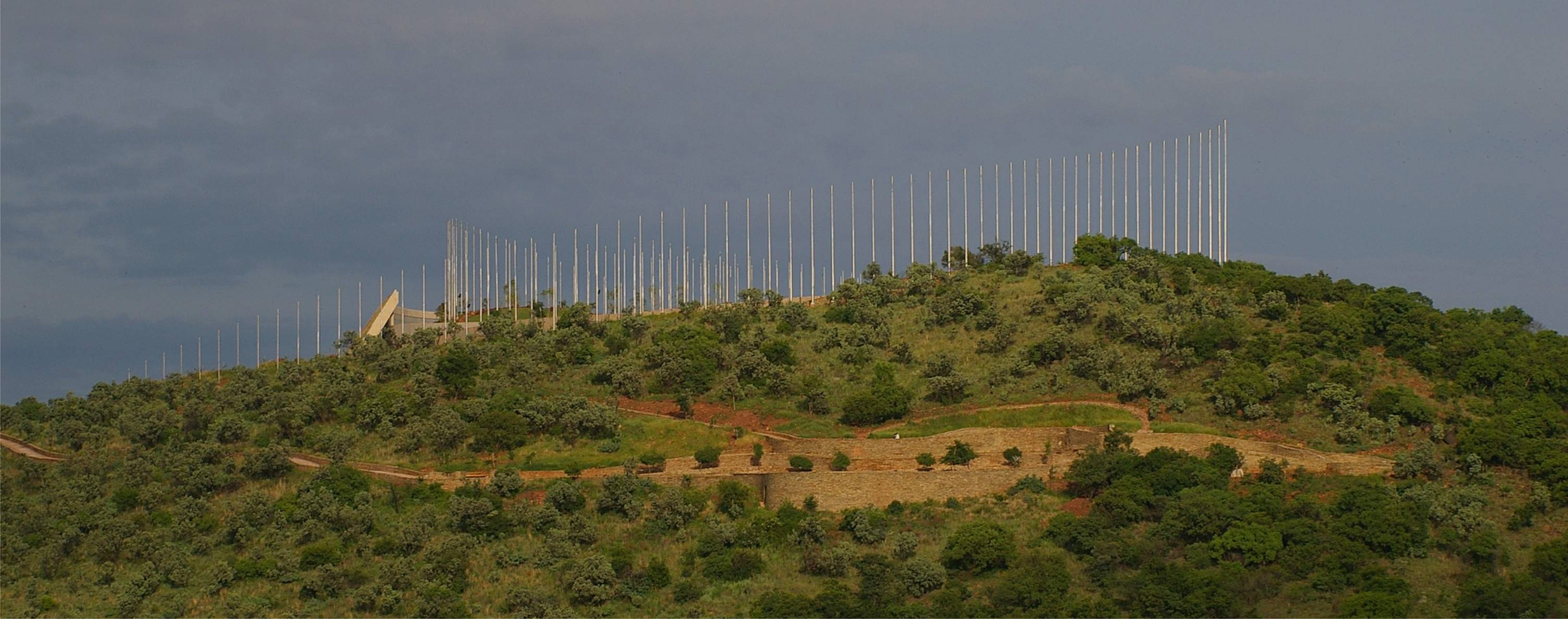
To mark Freedom Park from a distance a noticeable vertical element was designed into S’khumbuto. The notion behind the element was derived from the African philosophy of creation that acknowledges reeds as the conduit to life. The idea of a rising line of ‘reeds’ (sculpted stainless steel masts) was also embraced to give a sense of progress in the struggle for freedom and to celebrate hope for the future.
End note
The design challenge was to introduce people to African culture, symbolism and spiritual meaning through a landscape design that expresses the place in an abstract manner – so as not to alienate any one cultural group. In seeking to meet this challenge, the landscape architects integrated Freedom Park’s physical elements into an already beautiful site to create a landscape that resonates with universal symbolic and spiritual meaning – yet which is unashamedly founded in African cultural expression. In telling this unique South African story and using landscape narrative as the main ordering and referencing device, the design anticipates the audience’s perceptions and experiences of place such that the landscape, with its natural and cultural references, becomes visible, tangible and palpable, giving form to an experience that aesthetically, and emotionally engages visitors. The design operates as a focusing lens for discovering and knowing the meaning behind Freedom Park and in so doing hopes to reduce perceptual barriers and effectively act as a catalyst for healing, reconciliation and nation building.
| Tipologia | Parcs no urbans |
| Promotor | Freedom Park Trust |
| Promoció | P?ca |
| Localització | Gauteng, Pretoria, Sudàfrica |
| Àrea | 52000 m² |
| Cost | 110 €/m² |
| Any inici | 2002 |
| Any finalització | 2012 |